
Kyoto is unmissable not simply because it is absolutely beautiful and inspiring, but because it allows you to understand Japan in its most complete form. After moving through all the other cities, this is where everything beginned to make sense for me: most Japanese cities are read in fragments; Kyoto is read as a whole. The city was largely spared from bombing, its cultural importance so immense that its historical sites were even spared during the war, in recognition of its unique status as the cultural centre of Japan for twelve centuries.
Urban fabric
The city sits within a basin, enclosed by low mountains, a geography that has both protected and defined it. As the imperial capital for more than a millennium, it accumulated rather than replaced, layer upon layer, resulting in a city where architectural continuity is still legible at the urban scale. Unlike most Japanese cities, it was largely spared destruction during the Second World War, and this alone makes it structurally different: here, the fabric remains intact enough to be read as a system rather than as fragments.
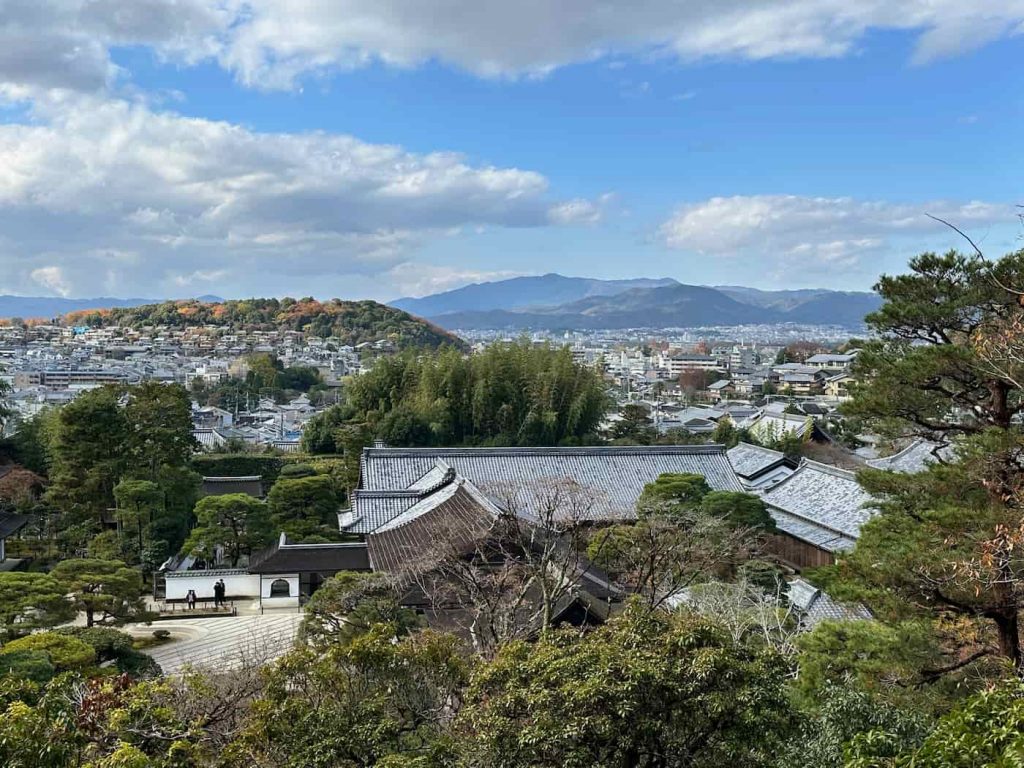
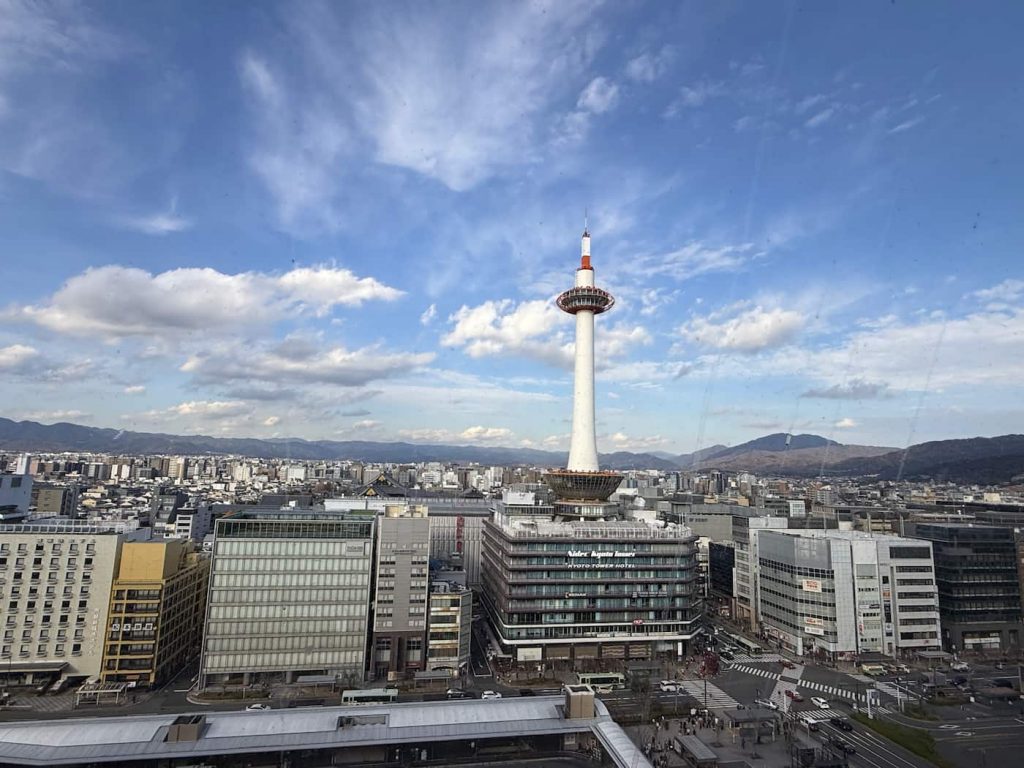
What becomes immediately apparent is the consistency of its underlying logic. The urban grid, originally derived from Chinese planning models, provides a clear framework, but within it the architecture remains distinctly Japanese, timber-based, horizontally expressed, and deeply connected to climate and craft. Kyoto was founded in 794, when Emperor Kammu relocated the imperial capital to Heian-kyō, a city laid out on a strict north-south grid: two great avenues running parallel from the Rajōmon gate in the south, with the Imperial Palace at the northern head of the axis. This cosmological urban plan, borrowed from the Chinese capital Chang’an, organised the city as a diagram of political and spiritual order. Much of that grid is still legible today and you can walk Kyoto with the original 8th-century street pattern as your guide.
In Kyoto, you can trace the entire arc of Japanese architectural history not in a museum but in the built fabric of a living city. The first Buddhist temples of the 8th century sit in the same urban geography as the Heian period garden palaces of the 11th century, the Zen monastery complexes of the 13th and 14th centuries, the sukiya-zukuri villas of the 17th century, the machiya of the Edo and Meiji periods, and the contemporary architecture of today. Nowhere is this continuity more extraordinary than in the simple fact that Kyoto has 1,600 Buddhist temples and 400 Shinto shrines still functioning, still inhabited, still accumulating the weight of living devotion. Seventeen of them constitute a UNESCO World Heritage Site.
The Zen monastery districts
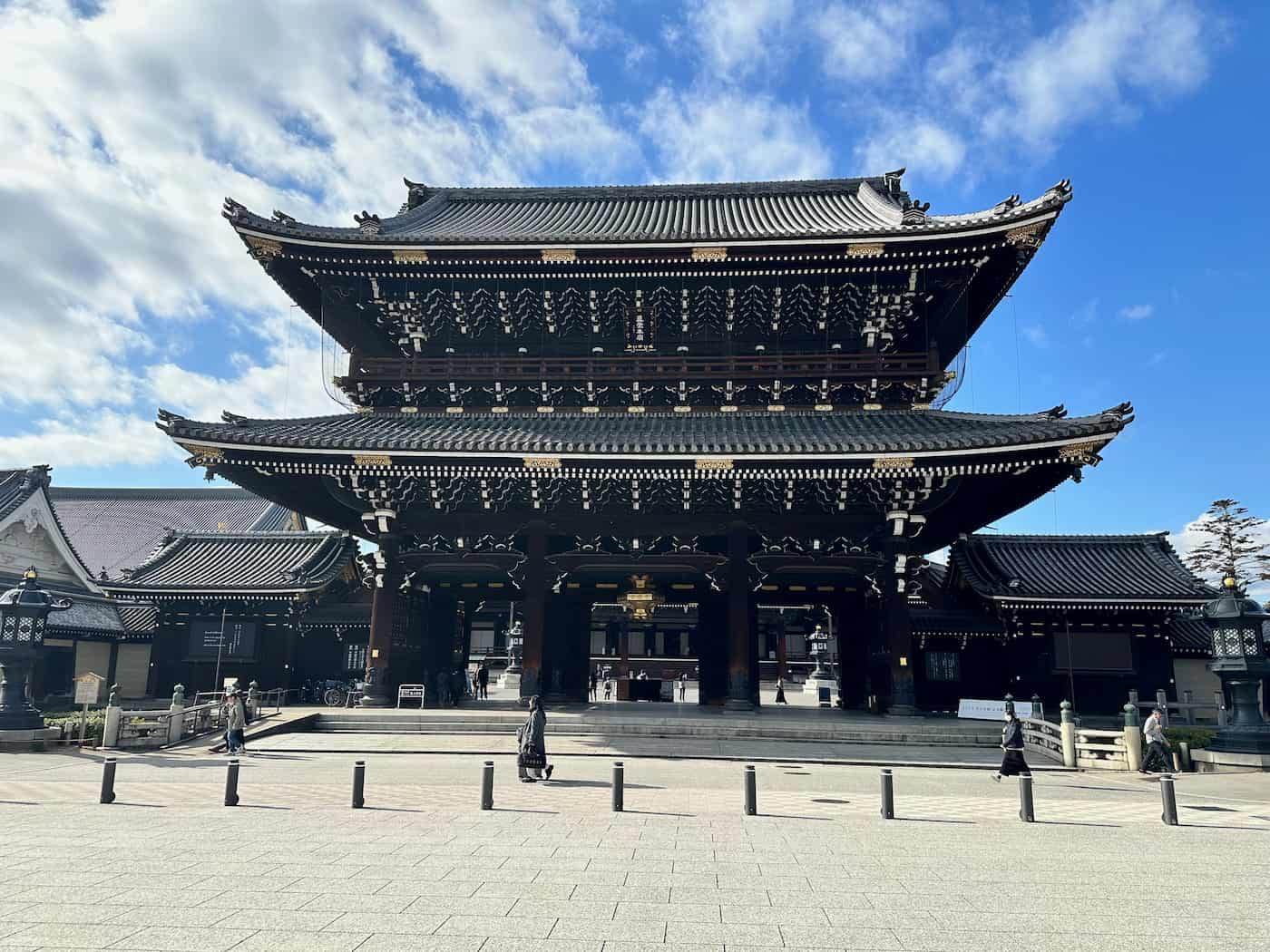
Let me begin where the architecture first broke through my professional detachment and became something I felt rather than merely analysed: the great Zen monastery complexes of north and east Kyoto. Daitoku-ji, in the northwest, is not a single temple but a city within the city, a walled precinct containing 23 sub-temples, each with its own garden, its own gate, its own spatial sequence. Most are not open to the public most of the time, which means the precinct retains a sense of active monastic life, of spaces that have purposes beyond reception. When you walk the lanes between the sub-temple walls in the early morning, hearing the chanting from within, smelling the incense smoke that rises above the tile roofs, you understand that this is not heritage but practice, the architecture is being used for exactly the purpose it was designed for, and that use is what keeps it alive.
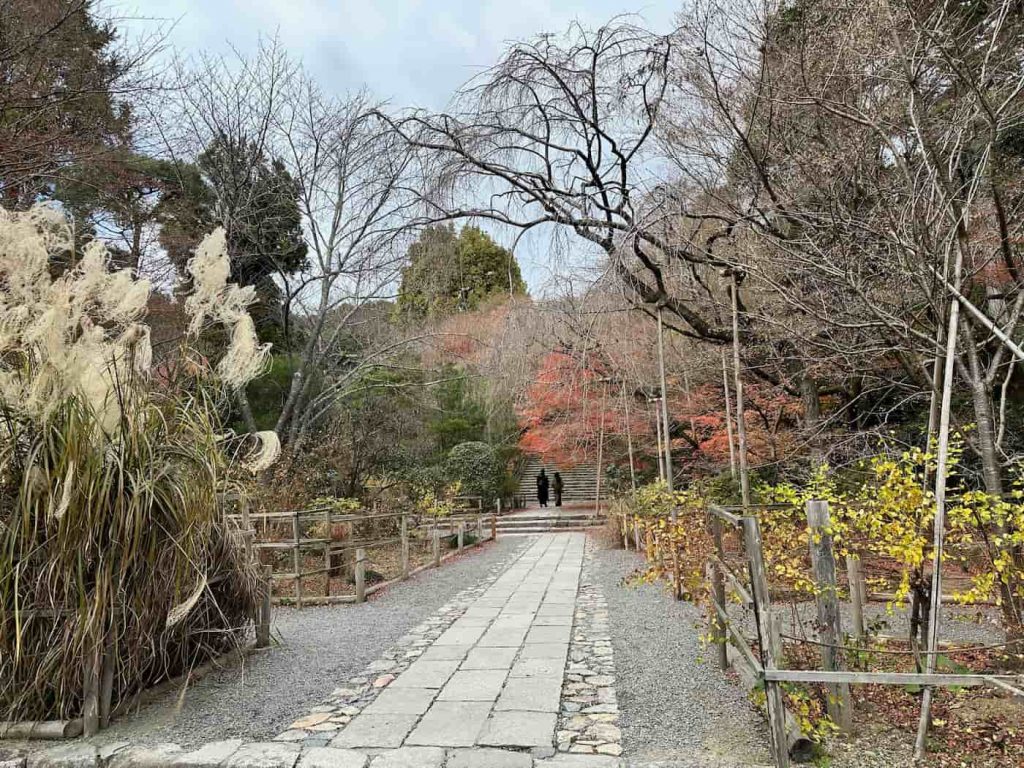
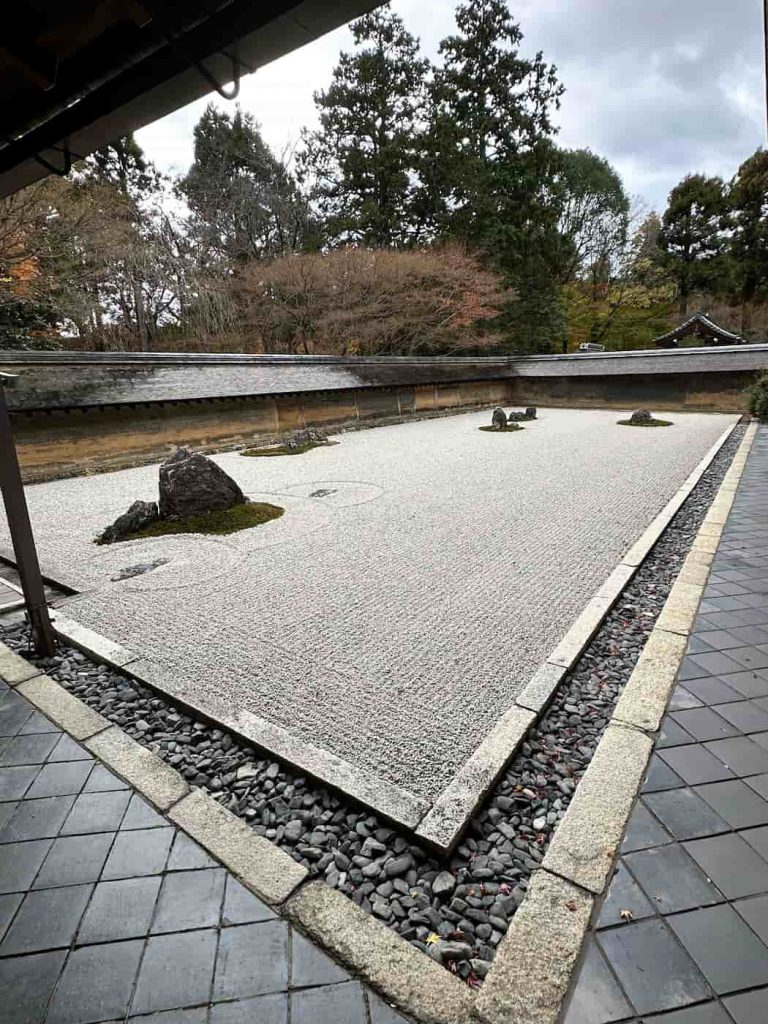
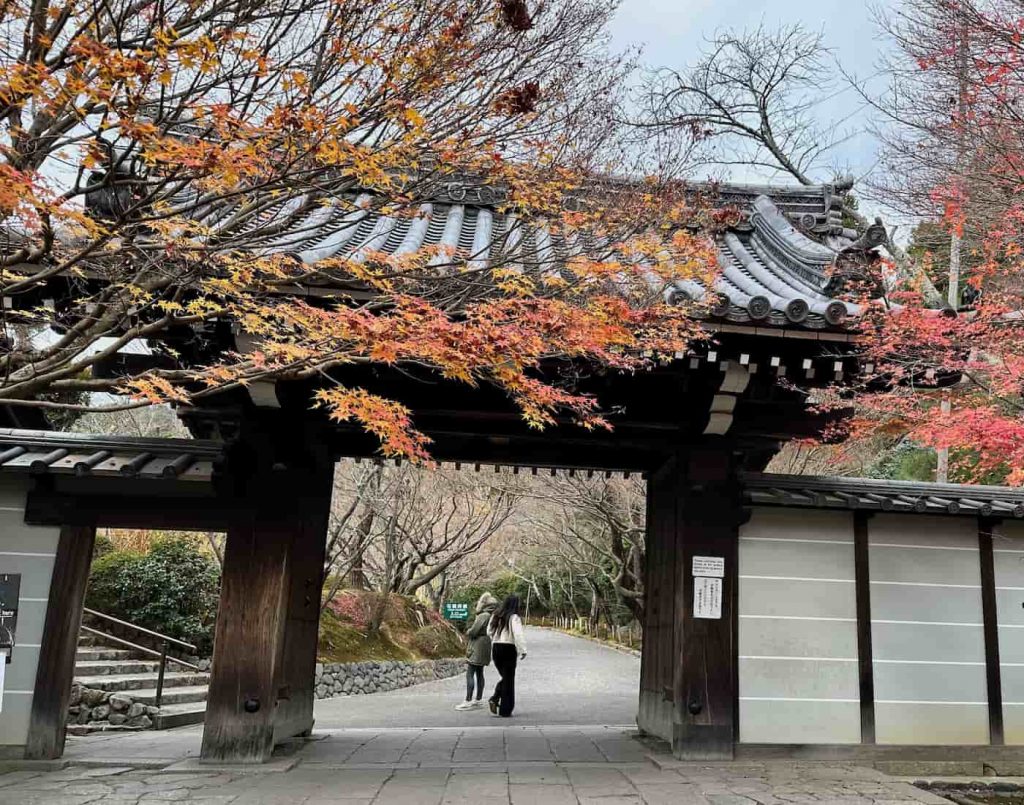
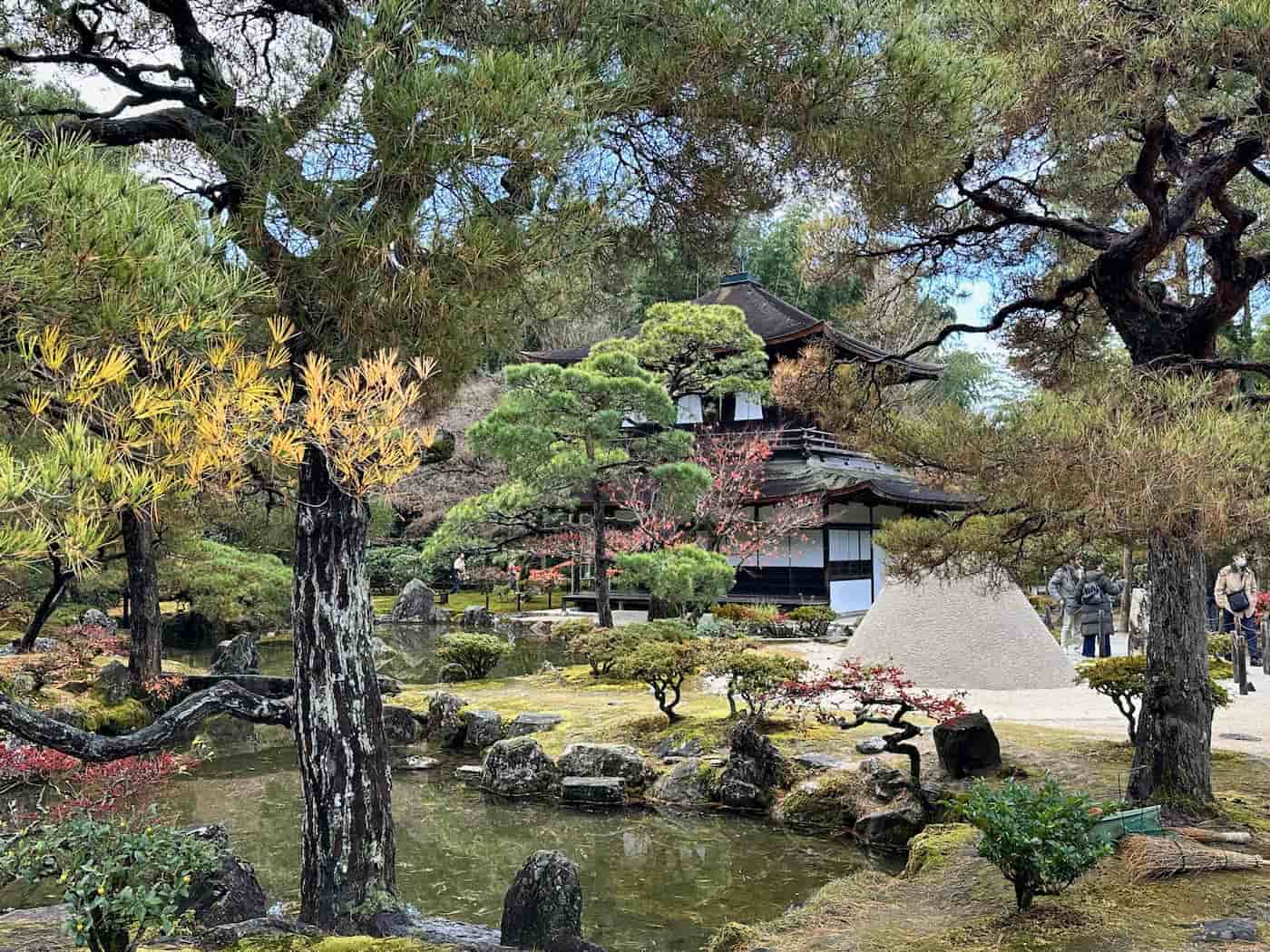
The gardens of Daitoku-ji’s sub-temples, Daisen-in, Ryōgen-in, Zuiho-in, contain some of the finest surviving karesansui compositions of the Muromachi period. Daisen-in in particular is a masterpiece of miniature landscape narrative: a rock garden of extraordinary complexity occupying a narrow L-shaped space around the hōjō, its stones arranged to represent a river journey from mountain source to open sea, the entire cosmological arc compressed into an area smaller than a tennis court. The relationship between the architecture and the garden here, the engawa of the hōjō as the viewing platform, the white plaster walls as the frame, the raked gravel as the pictorial ground, is an example of the Japanese principle that interior and exterior are not opposites but one continuous spatial proposition.
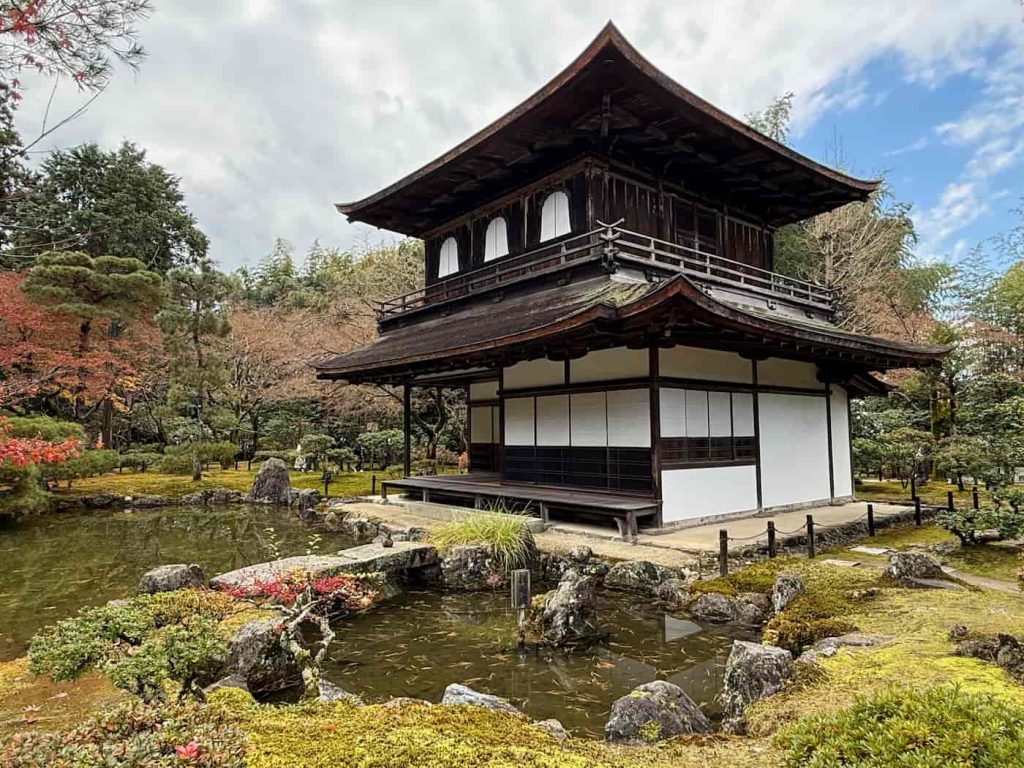
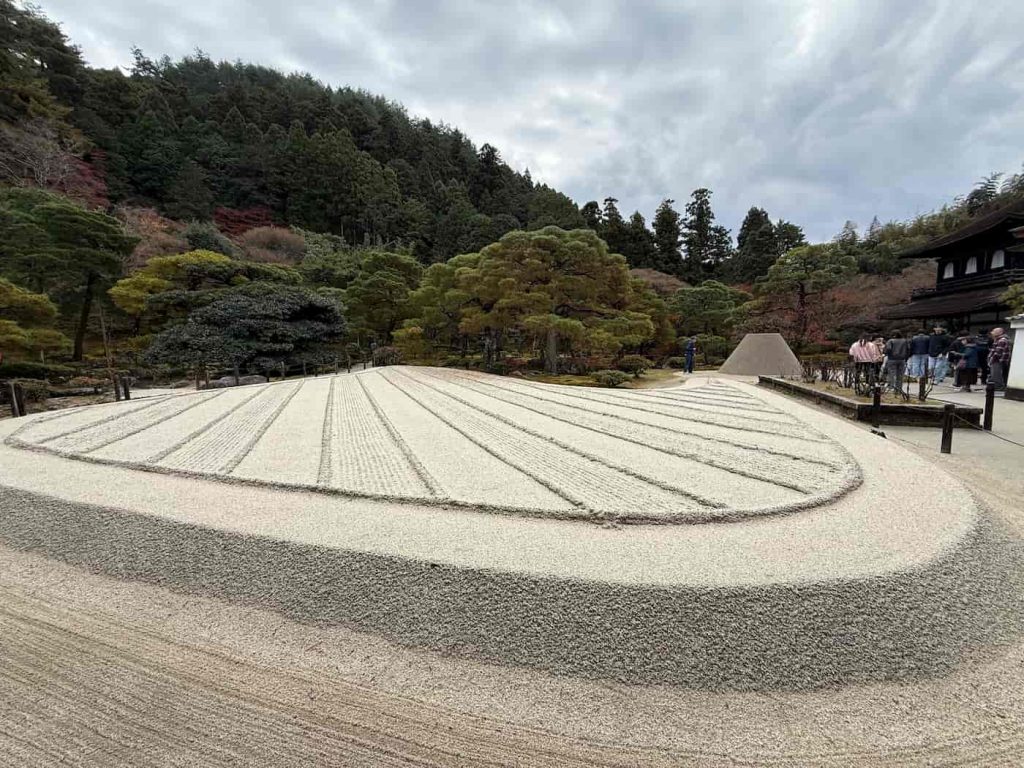
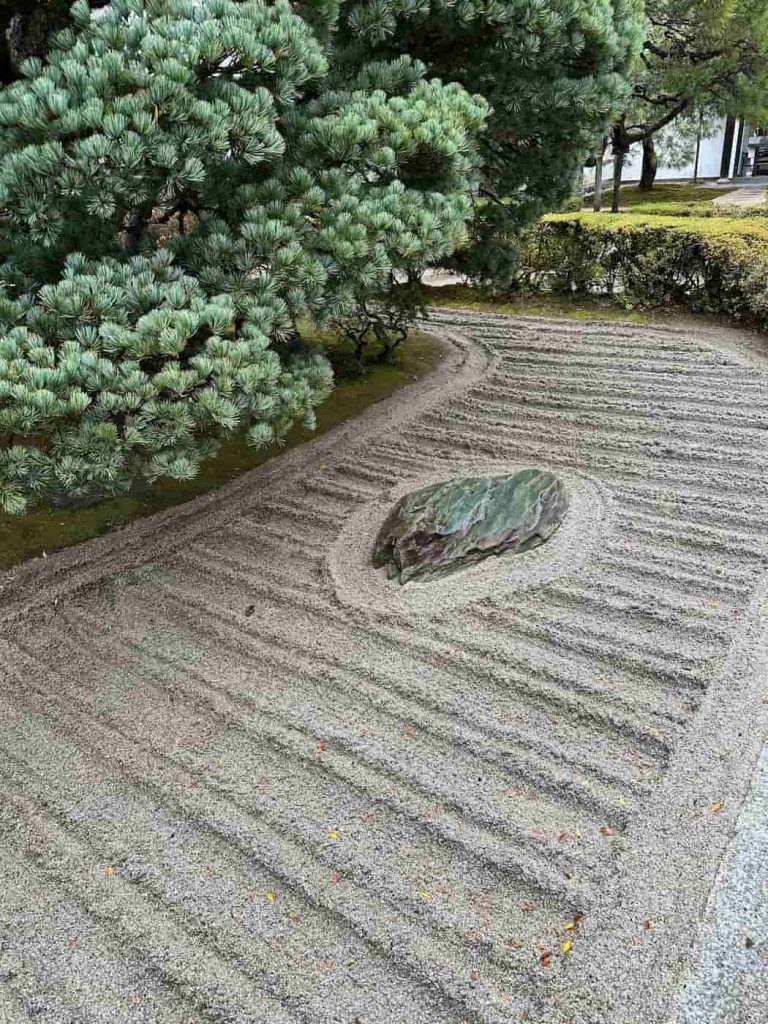
Tōfuku-ji, in the southeast of the city, offers an entirely different garden experience. Its hōjō complex, redesigned by Mirei Shigemori in 1939, contains four gardens, north, south, east, west, that represent the deliberate application of modernist compositional principles to the karesansui tradition, using an asymmetric grid of azalea hedges, a checkerboard pattern of moss and stone, and a bold diagonal stone-and-moss composition that breaks every convention of the historical canon. That Shigemori did this within the precinct of one of Kyoto’s great Rinzai Zen monasteries, and that it reads as perfectly at home there, is testimony to both his genius and the depth of the tradition he was working within.
The machiya city: A living archive of craft
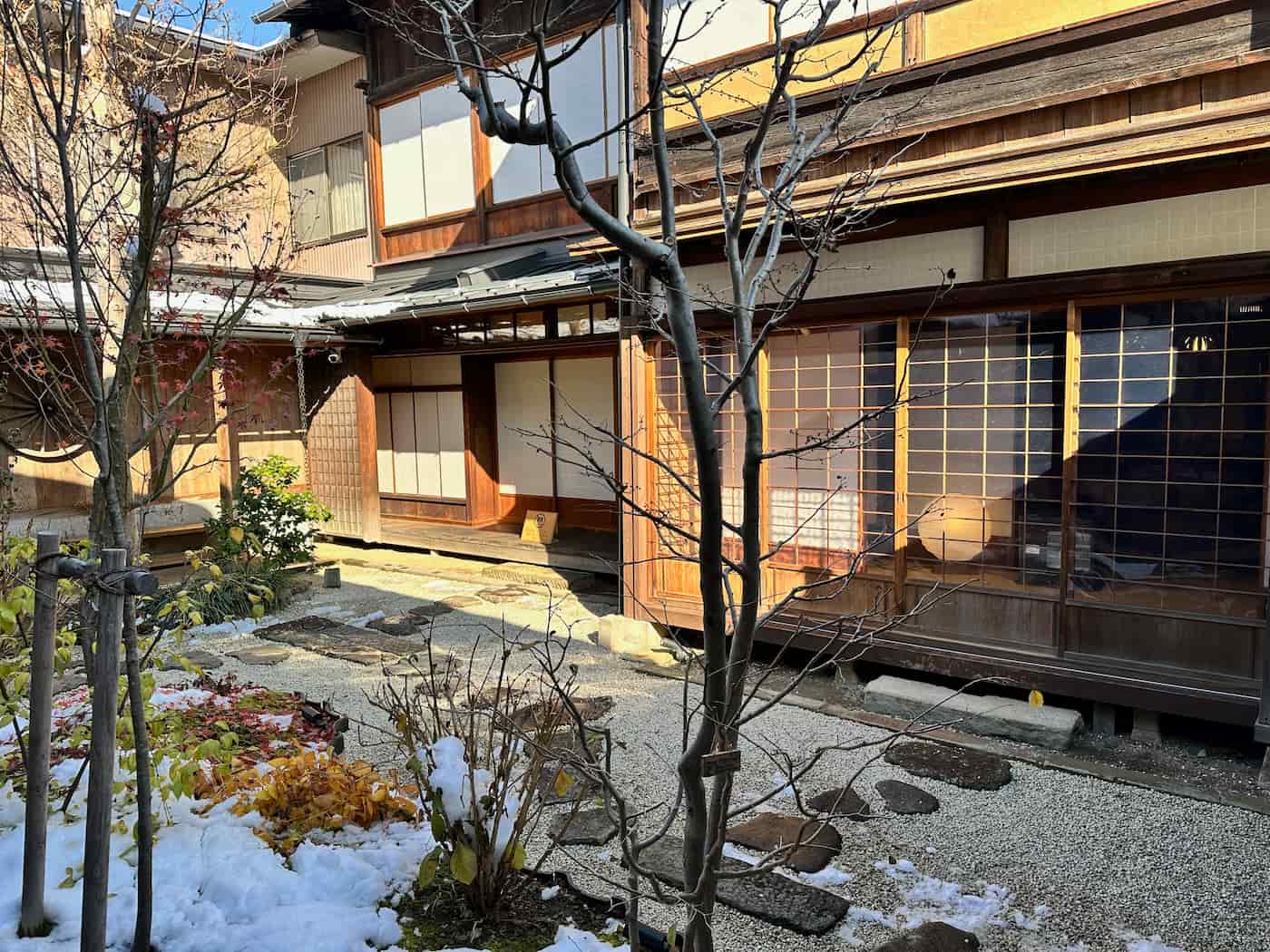
But Kyoto is not only its temples and gardens. The machiya streets survive in Gion, Higashiyama, Nishijin, and the quieter residential districts east of the river. Kyoto’s machiya are the defining expression of this typology. With their typical plot width of 5.4 to 6 metres and depth of 20 metres or more they represent centuries of accumulated intelligence about how to build a dense urban settlement that is simultaneously commercially productive, domestically comfortable, climatically responsive, and aesthetically refined.
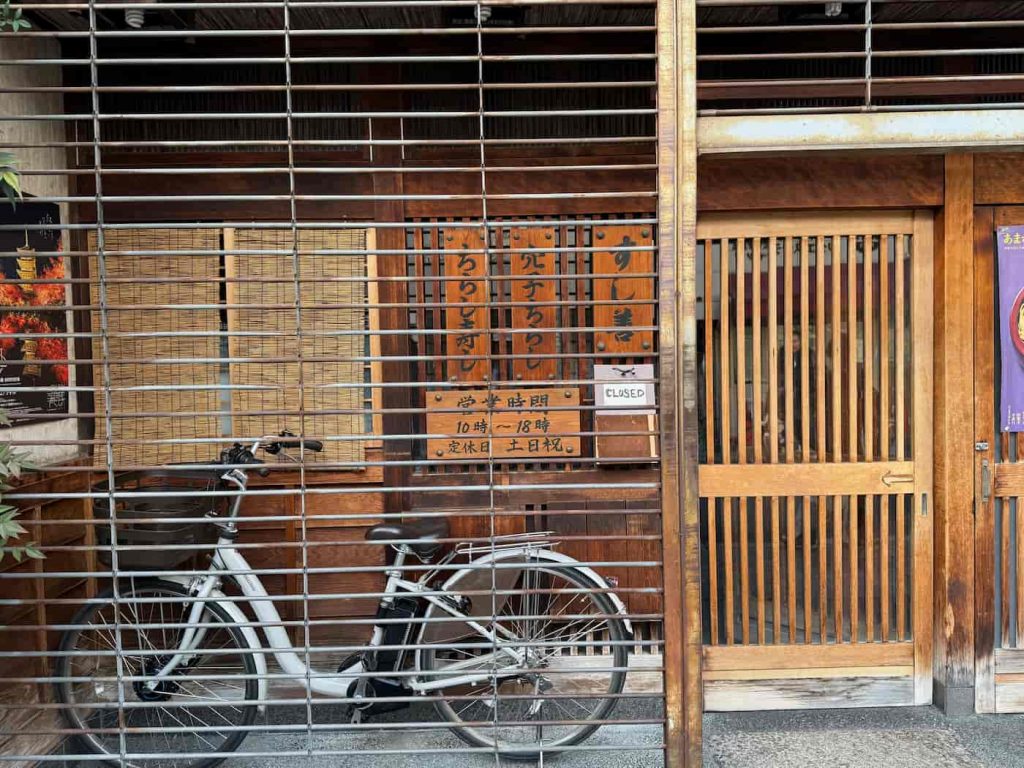
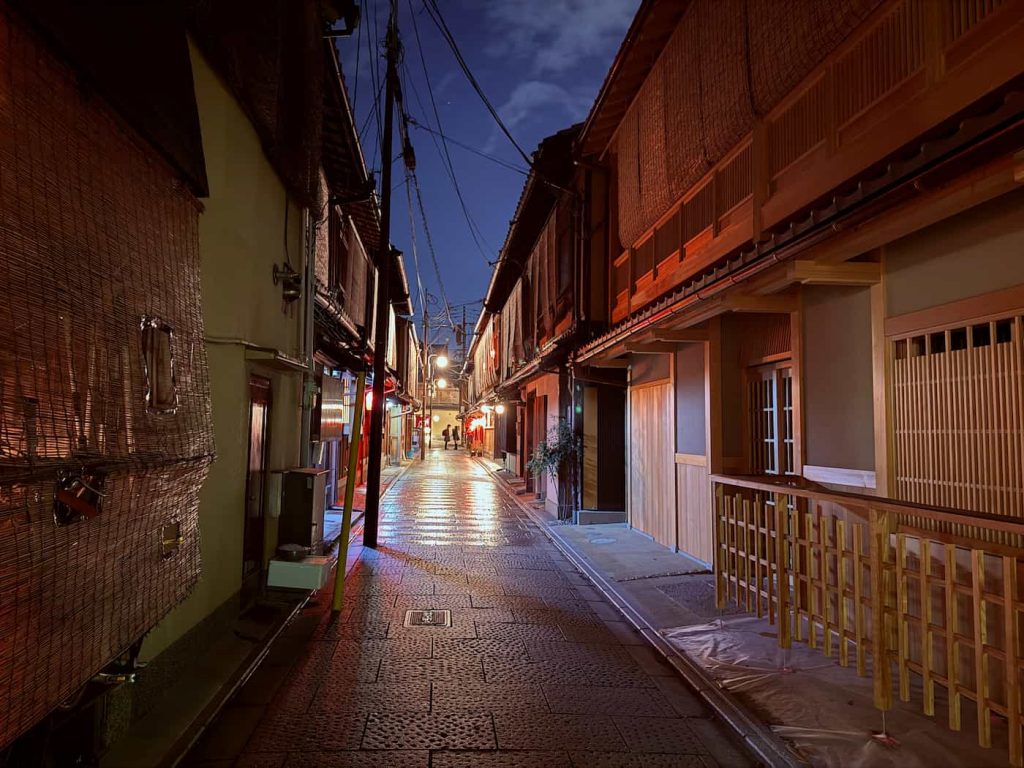
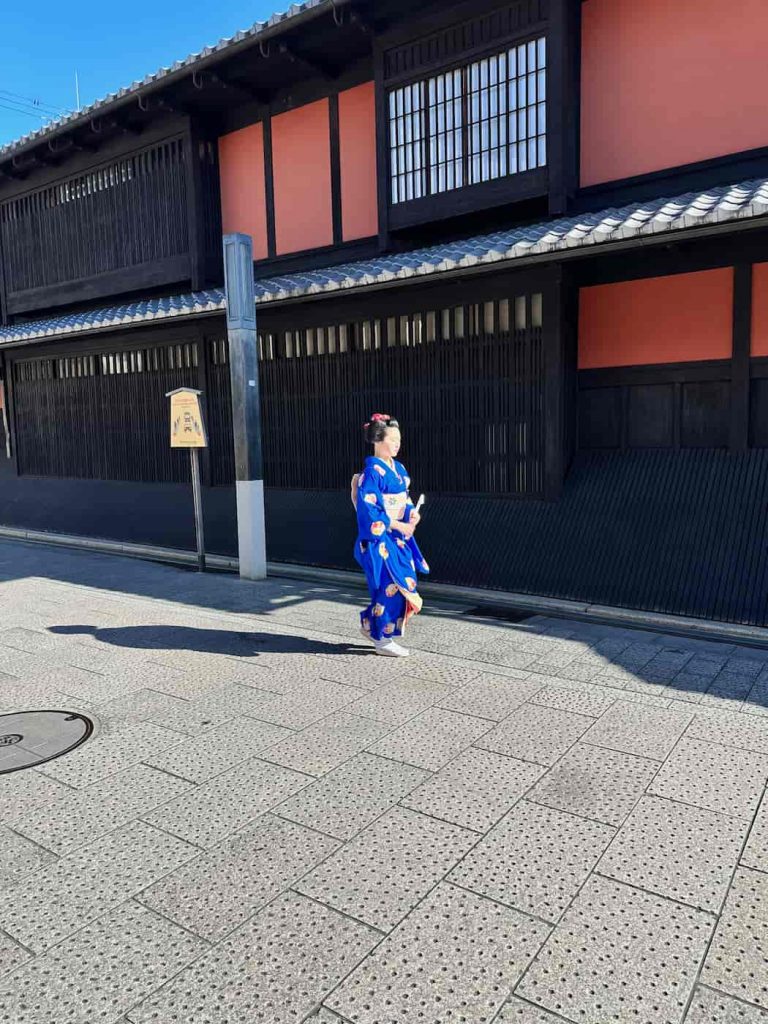
In Kyoto’s historic geisha districts like Gion, the traditional paper lanterns hang outside teahouses, displaying the name or emblem of the establishment and guiding invited guests with their soft glow. The mushiko-mado windows set into the upper storey plaster, their horizontal latticework admitting ventilation and diffused light while preserving the visual privacy of the rooms within, are one of the most eloquent constructional details of the entire Japanese domestic tradition. Small ceramic figures of Shoki-san, the demon-quelling guardian, sit on the rooftops of machiya across the city, folk protection woven into the architecture at the scale of the ornamental detail.
The Nishijin textile district, in the northwest, is where this urban fabric connects most directly to the living craft tradition. In many areas, traditional machiya were traditionally defined by a single craft or product, while the Nishijin neighbourhood is famous for its textiles, sharing a craft contributing greatly to a sense of community among fellow textile merchants. For centuries, the looms of Nishijin wove the brocades and silks for the imperial court, the aristocracy, and the great temple complexes of Kyoto. Alongside working textile workshops, there are renovated machiya transformed into kaiseki restaurants, art galleries, and cafes, and as you walk through the neighbourhood dotted with traditional machiya, you might be lucky enough to catch the sound of Nishijin-ori looms where artisans still live and work. The Tondaya machiya, a 19th-century merchant townhouse that has served the same family of kimono wholesalers for thirteen generations, is perhaps the most complete surviving example of the wealthy merchant machiya interior in Japan, with tea rooms, a Noh theatre, three gardens, and three storerooms concealed behind a façade of disarming modesty.
The great temple and shrine complexes
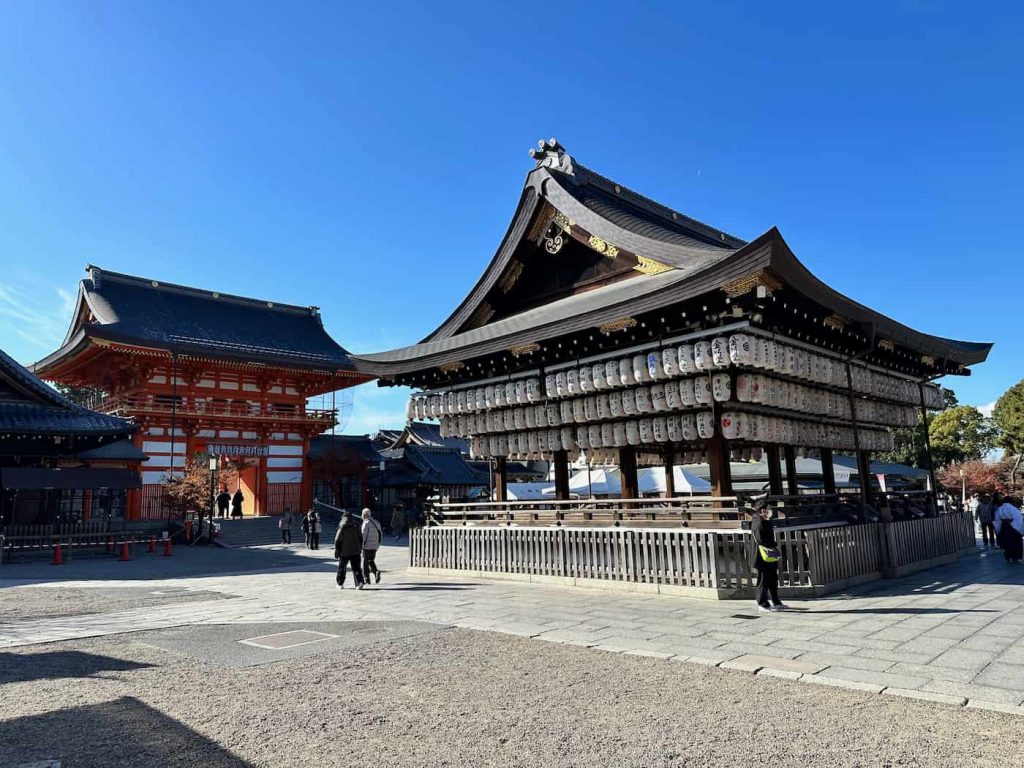
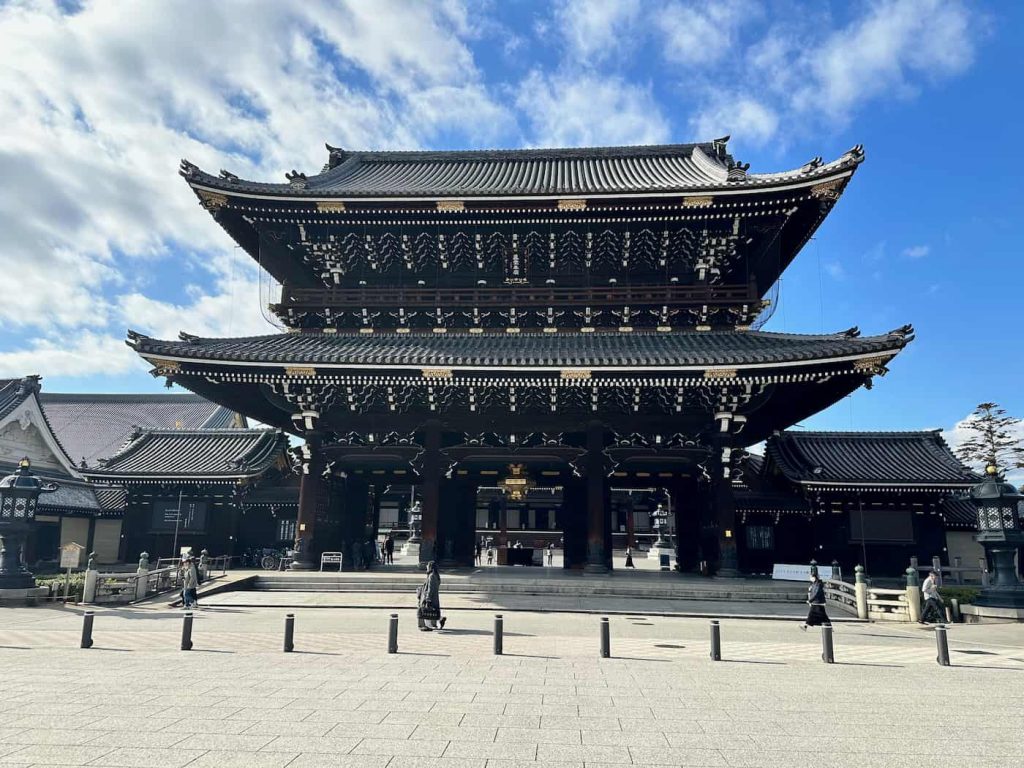
Nijō Castle built by Tokugawa Ieyasu in 1603 as the shogunal residence in the imperial capital is the best place in Kyoto to study the architecture of political power. Tokugawa’s Kyoto residence establishes his strength at the very entrance, with the opulent Karamon gate. Beyond it, the Ninomaru Palace was designed to filter visitors through a long sequence of buildings, each more exclusive than the last, with the shogun’s audience chamber at the culmination backlit for extra drama, positioned on a slightly higher tatami level, the surrounding paintings by Kanō School artists projecting authority through sheer pictorial grandeur. The famous nightingale floor boards engineered with nails and clamps to produce a singing squeak when walked upon, alerting occupants to any movement in the corridors are both a security device and a metaphor: in Tokugawa’s Kyoto, power was exercised through control of space, of access, of sound.
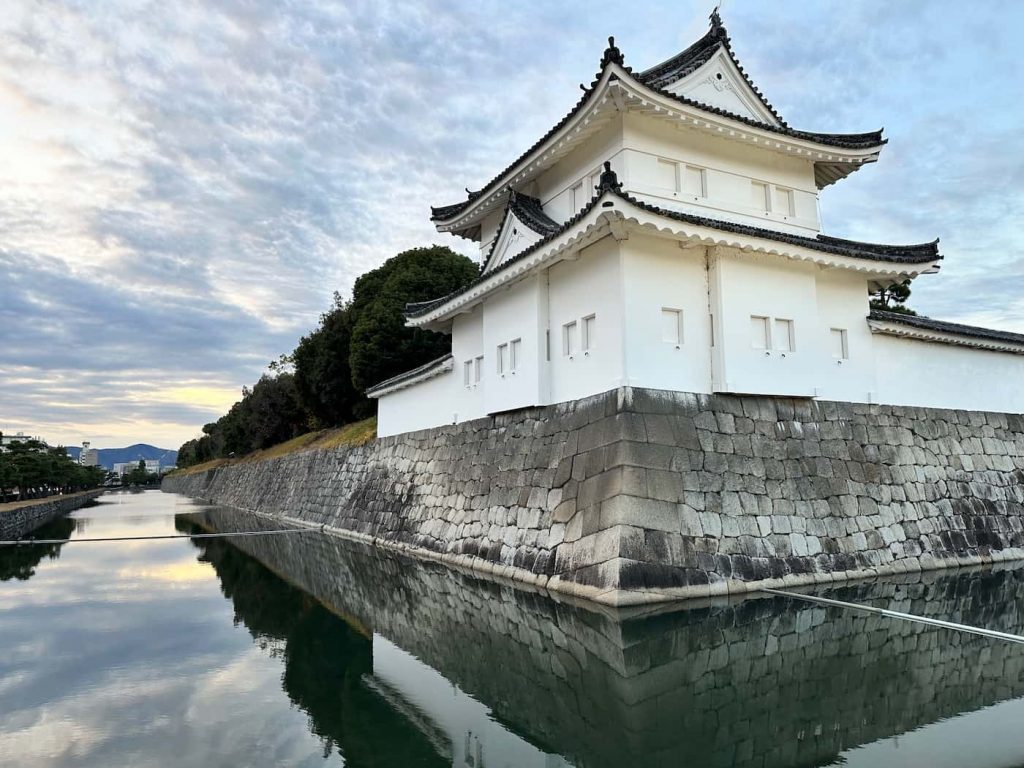
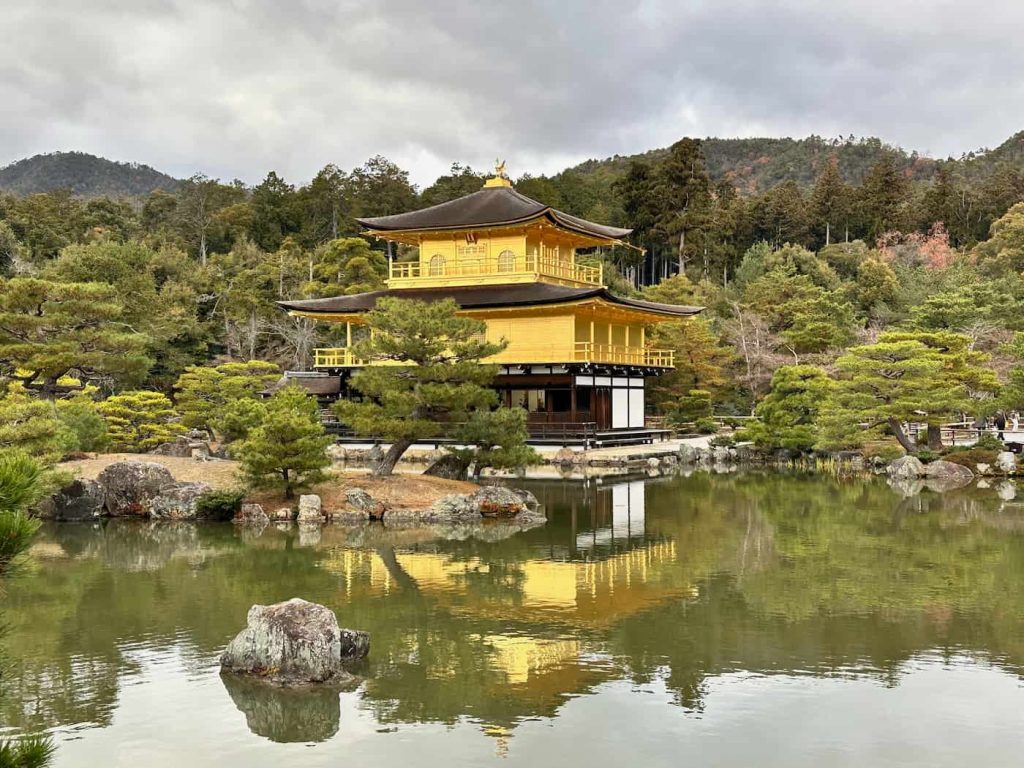
Katsura Imperial Villa set in the southwestern suburbs along the Katsura River, built between 1628 and 1658 for two imperial princes and with garden designer Kobori Enshū is just stunning. The German architect Bruno Taut, visiting in 1933, described it as so beautiful that it almost brings tears to your eyes, and while that sounds like hyperbole, it isn’t. Katsura is the supreme expression of the sukiya-zukuri residential tradition: a sequence of shoin buildings stepping diagonally across the site at slightly different angles, each connected to the next by a covered passage, the entire ensemble set within a stroll garden that unfolds in a sequence of teahouses, stone lanterns, shore paths, and moon-viewing platforms arranged around a central pond. You arrive at the outer gate and the building is completely hidden. The garden path leads you in a curved trajectory that crosses a bridge, skirts the pond, passes under a canopy of bamboo, and then suddenly on turning a corner the main shoin building presents itself in its entirety, reflected in the still water of the pond. The architecture is the same in that moment as it has been all along; what has changed is the position and orientation of the viewer.
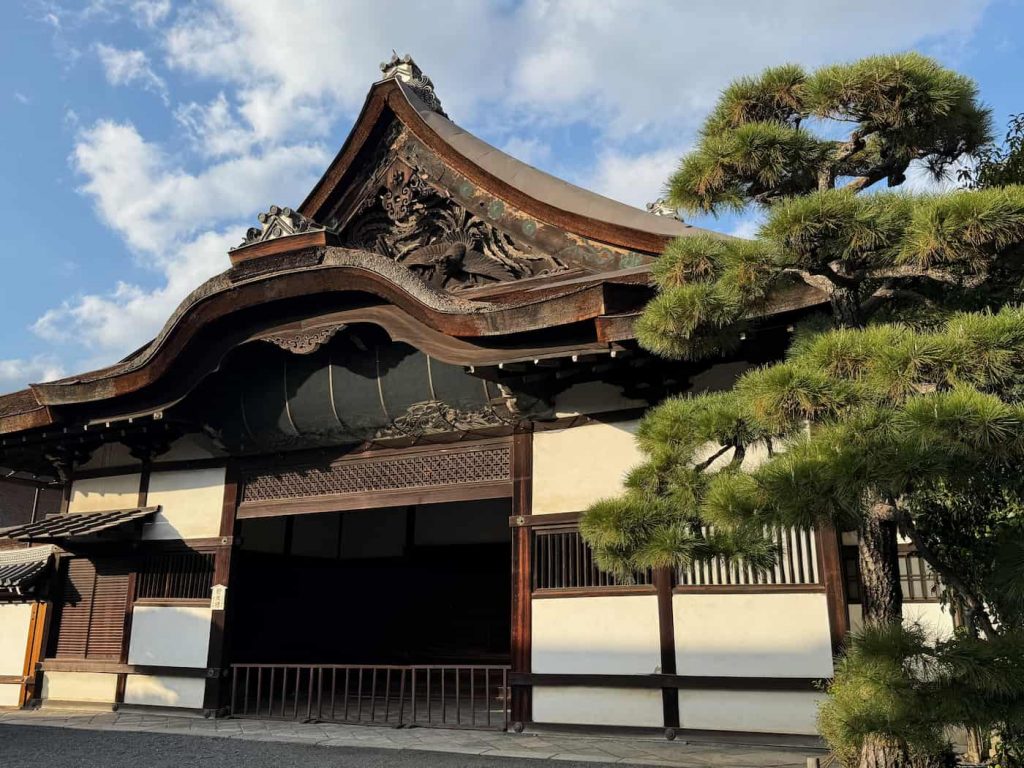
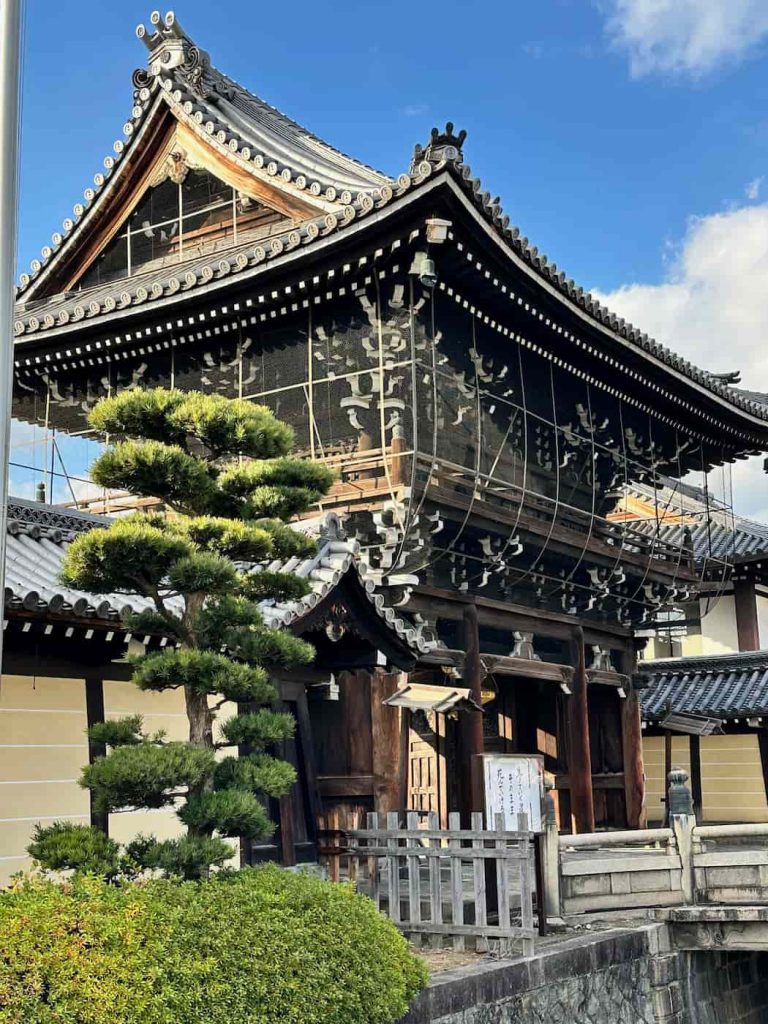
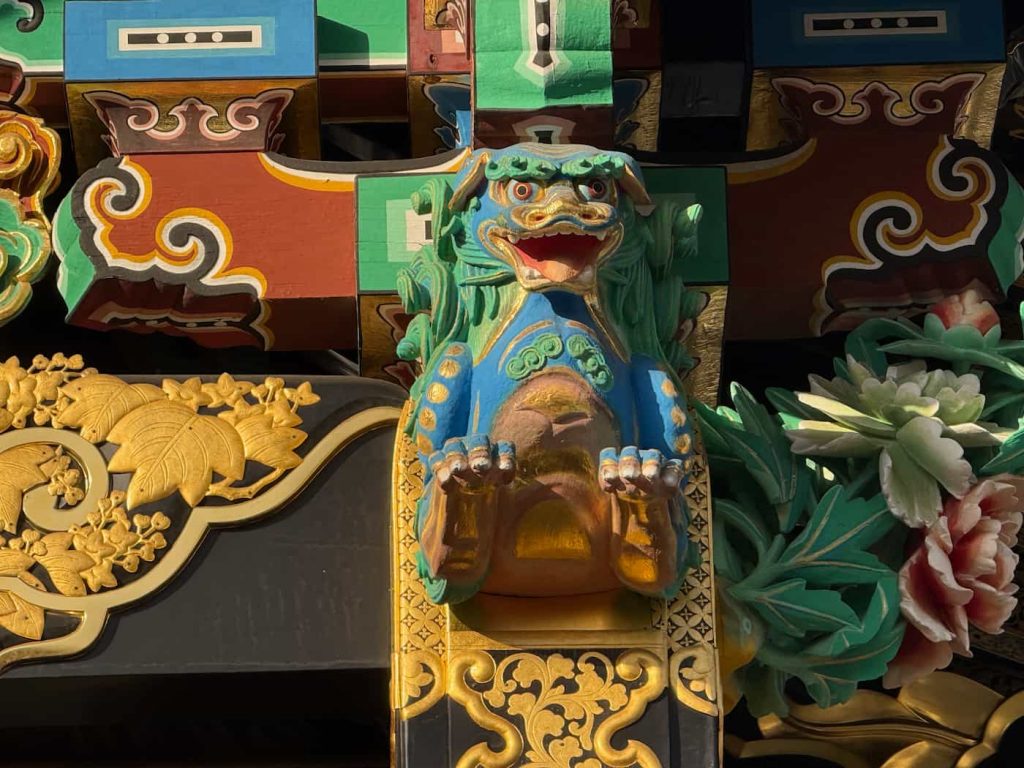
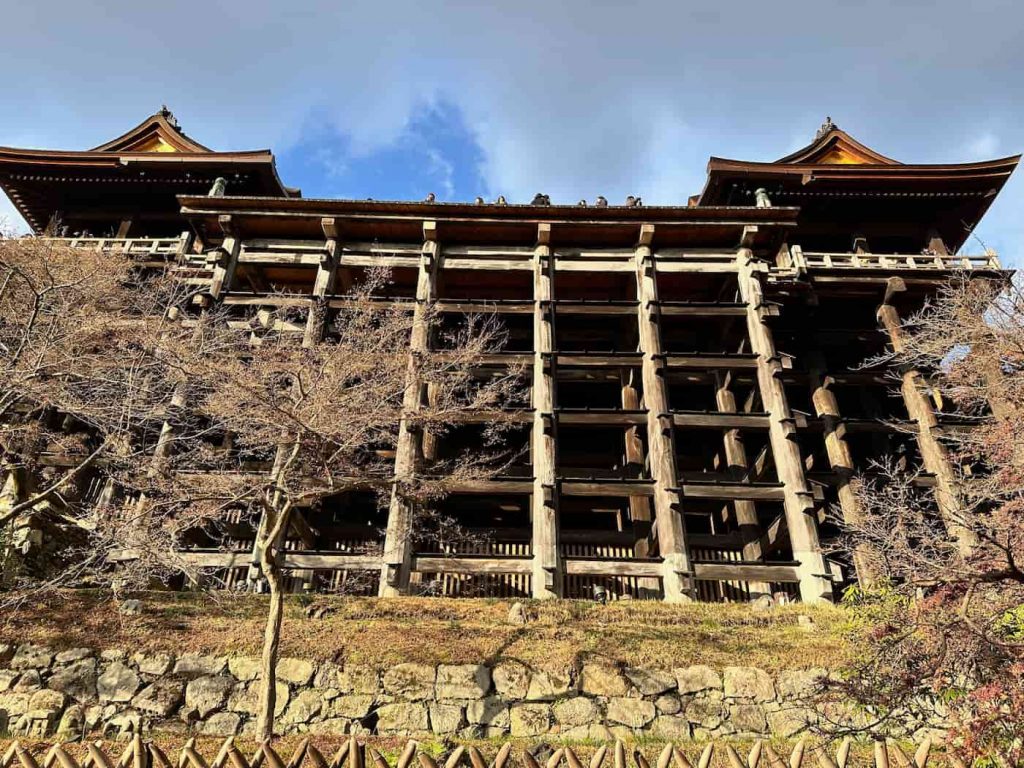
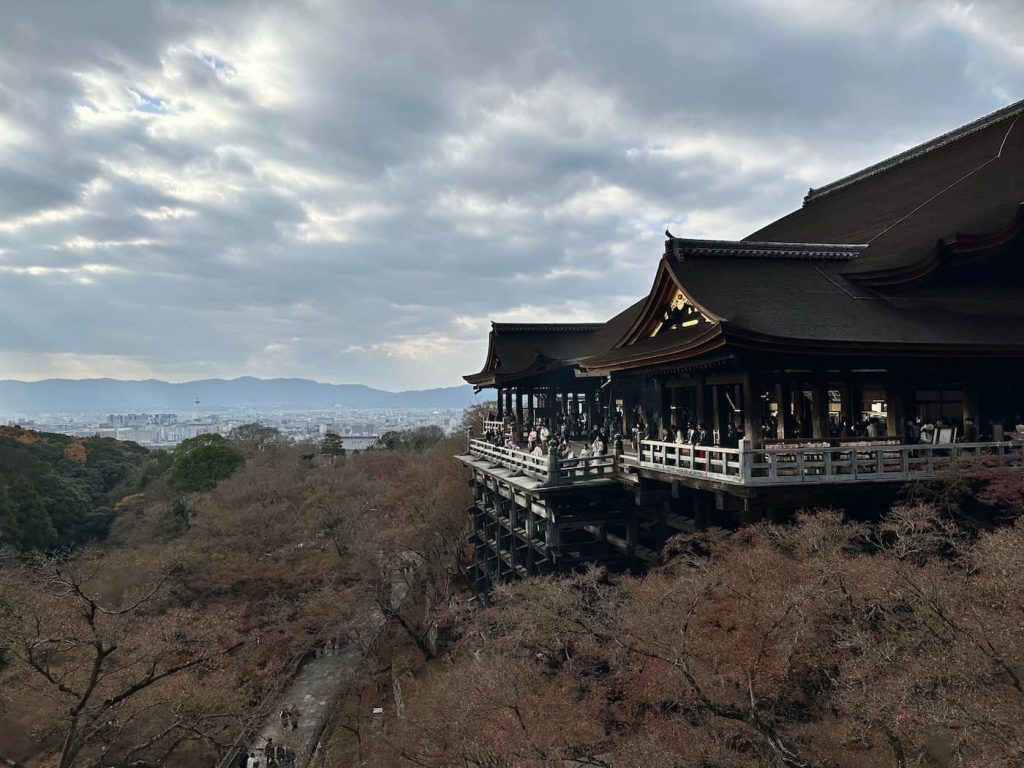
Kiyomizu-dera, clinging to the wooded hillside above east Kyoto, is the city’s most visited temple and one of its most structurally daring, a timber platform the size of a large sports hall, cantilevered from the hillside on a forest of 139 zelkova pillars assembled without a single nail, supporting the main hall and its famous veranda above a 13-metre drop to the valley below. The structural system, a jigumi frame of interlocking beams stepped out from the hillside in a cantilever that grows progressively further from the cliff face, is one of the great feats of pre-industrial timber engineering, and it has been rebuilt in this form repeatedly over the centuries in exactly the same way, using the same joinery logic, demonstrating that in Japan the accumulated knowledge of construction is a form of cultural heritage as significant as any individual building.
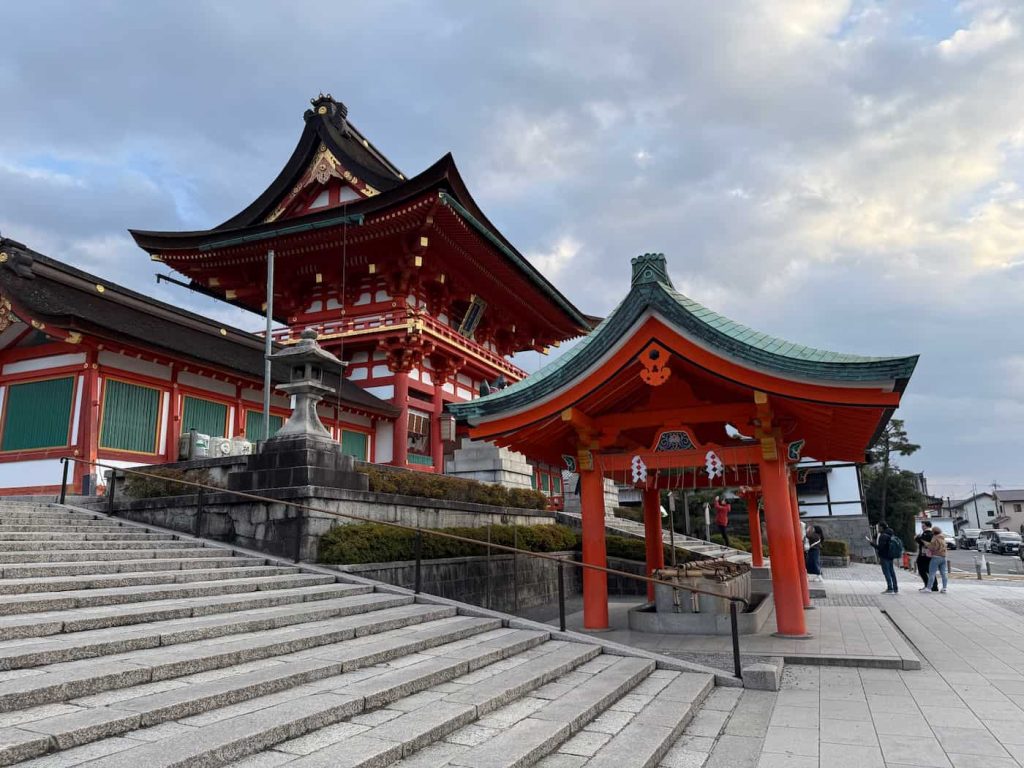
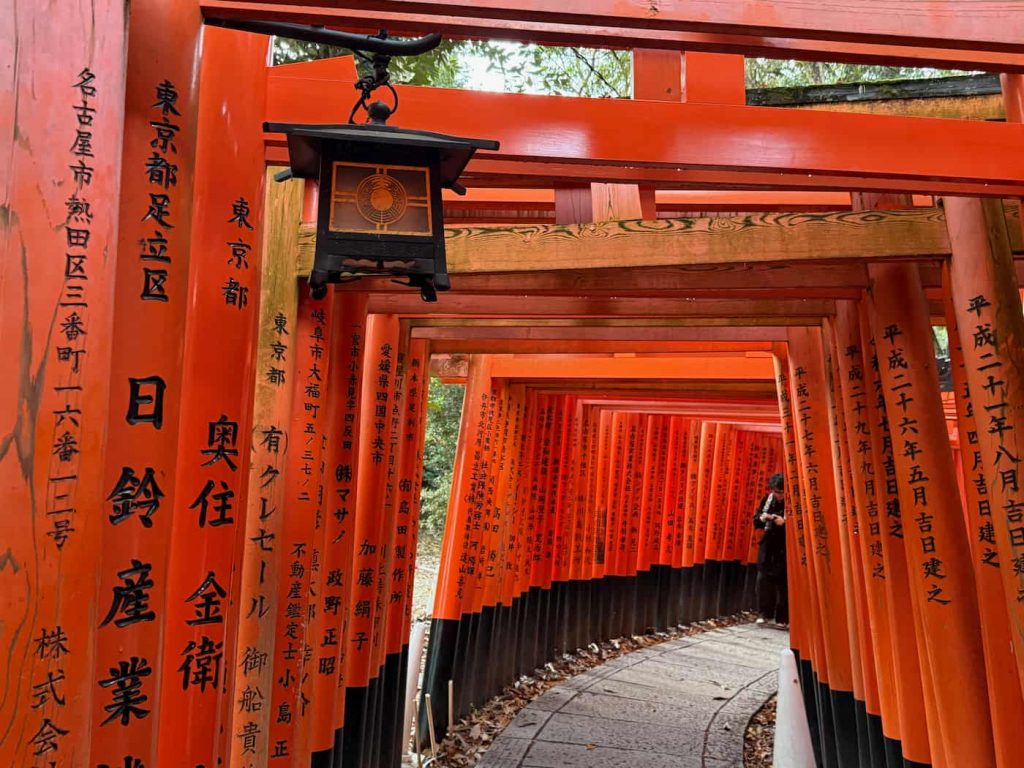
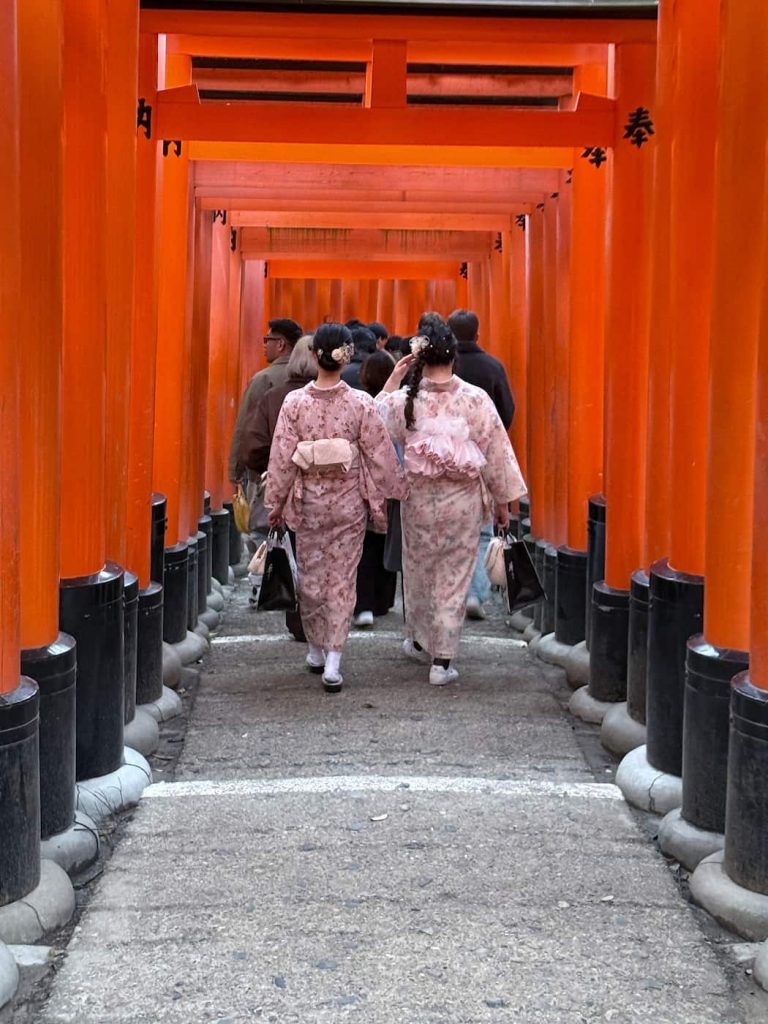
Fushimi Inari, the immense Shinto complex spread across Inariyama mountain in the south of the city, is architecturally remarkable for the way it colonises landscape at scale. The Senbon Torii is a the tunnel of thousands of vermilion torii gates ascending the mountain and is its most famous element: as a spatial experience it is unlike anything else in the world, the torii so densely overlapping that they become a continuous tunnel of orange-red light filtering through lacquered wood. The full mountain circuit, takes two hours and visits subsidiary shrines, stone foxes, and forested summits, is the deeper architectural experience, a complete illustration of how Shinto distributes sacred presence across an entire landscape, claiming mountain, forest, and summit as sacred territory through the placement of gates, shrines, and sacred markers at intervals that are neither random nor rigidly geometric but somewhere in between, following the topography with an intelligence that feels entirely natural.
Suggested
Give Kyoto time, at least five / seven days or more. Divide your attention between the main monuments and the quiet residential districts. Walk from Gion through Higashiyama in the early morning; take a bus to Daitoku-ji and spend a full day in the sub-temple gardens; walk the Philosopher’s Path in the late afternoon from Nanzen-ji to Ginkaku-ji. Book a visit to Katsura Imperial Villa, access requires a reservation but is free. Stay at least one night in a machiya accommodation in Gion or Higashiyama, not just for the experience of the space itself but for the quality of being present in the neighbourhood in the early morning and late evening, when the light is low and the crowds have gone and Kyoto is just a city of families and crafts and twelve hundred years of quiet intention.
Final thoughts
Of all the cities I visited in Japan (see my full tour here), Kyoto is unique not only for the concentration of traditional architecture, but for the way it continues to be inhabited as it was intended. Temples are not monuments; they are still places of worship and ritual. The city moves at a different pace, slower, quieter, more deliberate, and everyday life seems to align with its architectural setting rather than disrupt it. There is a simplicity to it, not as an aesthetic, but as a way of living. I left with the sense that I had only begun to understand it, and with the clear intention to return, to continue learning from its streets and from those who inhabit them.