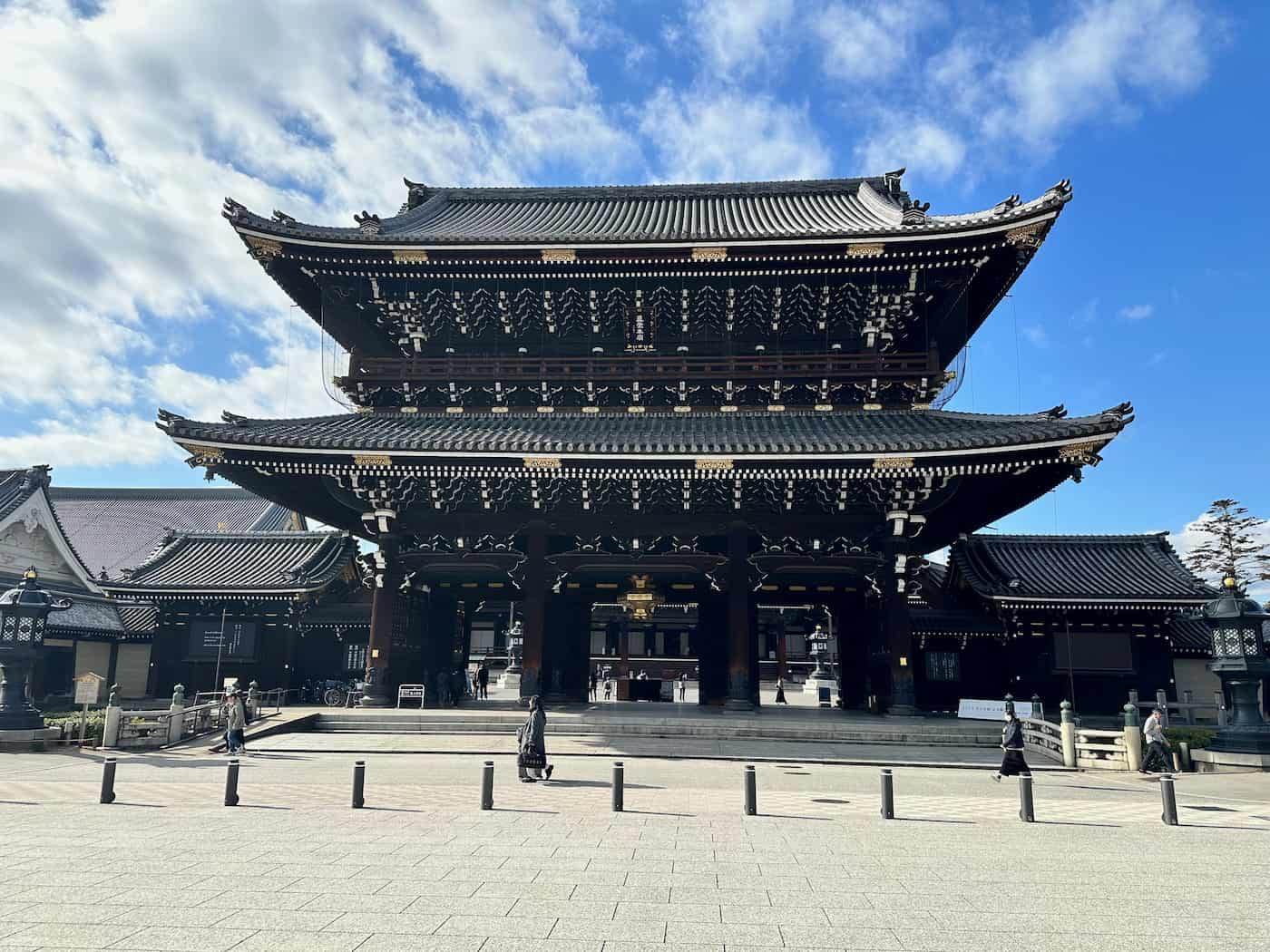

There’s a particular quality to the light in Japan in winter, it’s low, oblique, almost theatrical, the way it cuts through cedar groves and catches the underside of upswept eaves. I arrived in Tokyo in early November, rolled my backpack off the Narita Express, and immediately felt that shift that happens when you land somewhere that thinks about space differently from the place you came from.
Japan is a place that offered an unusual density of lessons about architecture, but also about how space can be composed, inhabited, and understood. These notes are an attempt to gather my observations into something coherent, both as a way of sharing what I found valuable, and as a way of holding onto ideas that felt too significant, at least for me, to leave unrecorded.
There are over 70,000 Buddhist temples in Japan, and a comparable number of Shinto shrines. That statistic is almost meaningless until you’ve walked through a mid-size Japanese city in the early morning and counted the number of gates, torii, incense coils, and moss-covered lanterns you pass through. The sacred in Japan is not separate from the everyday, it’s woven into it, at the scale of the street, the neighbourhood, the mountain. What that means, architecturally, is a tradition of extraordinary richness and complexity, one that I want to try to do justice to here.
Structure: timber, joinery, and controlled flexibility
At the heart of Japanese temple architecture lies a timber system that is both ancient and technically refined. It is easy to describe it as “post-and-beam,” but that risks flattening what is in reality a highly evolved tectonic language. Vertical columns (hashira) rest on stone bases, slightly elevated from the ground to prevent moisture damage. These columns define a structural grid, but unlike rigid Western frameworks, this grid is not about enclosure but about rhythm and spacing.
Horizontal members, nuki (tie beams) and keta (girders), bind the structure together, but the real sophistication appears at the top of the columns, in the bracket complexes known as tokyō. These are layered assemblies of interlocking wooden blocks that cantilever outward, gradually transferring the immense load of the roof down into the columns.
The repetition of brackets creates a visual cadence beneath the eaves, a deep shadow zone that gives the building both weight and lightness. Structurally, they also allow for wide roof overhangs without requiring massive walls, a crucial adaptation to Japan’s climate of heavy rain and snow. Equally important is the absence of metal fasteners in traditional construction. Mortise-and-tenon joints allow the building to absorb movement, particularly seismic forces. Rather than resisting earthquakes through rigidity, these structures accommodate them through flexibility.
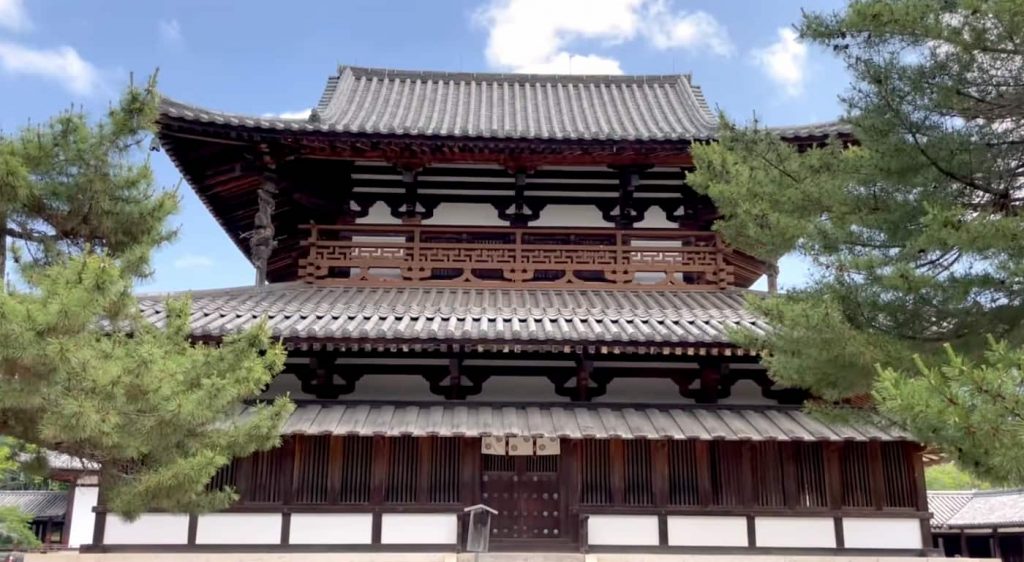
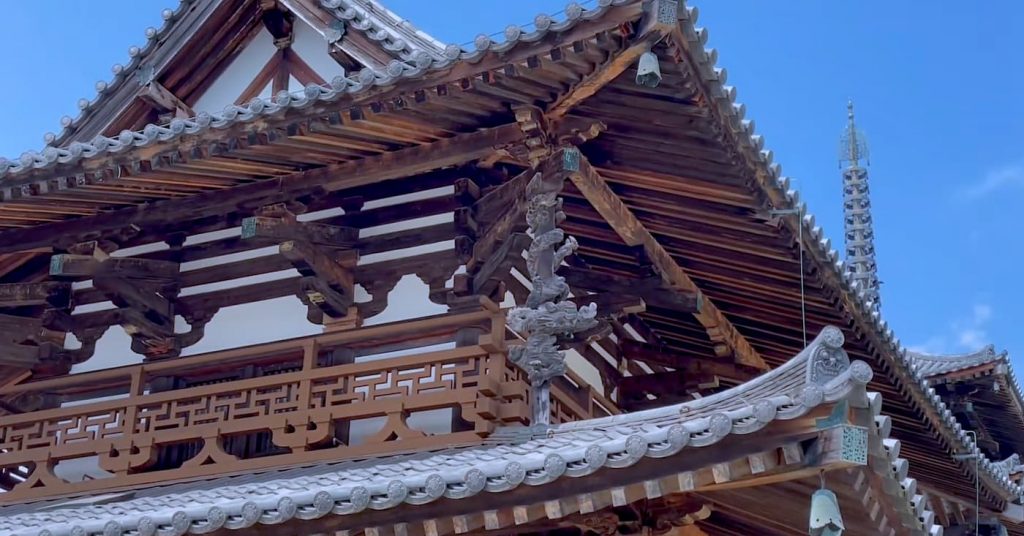
Hōryū-ji, near Nara, with its Kondō (Golden Hall) and Five-Storey Pagoda is considered among the oldest surviving wooden structures in the world. Standing inside that compound on a quiet winter morning, you feel physically the weight of history: the columns have an entasis (a slight swelling in the middle, borrowed from Greek and Indian traditions), the bracket systems are bold and simple, the proportions monumental.
The architectural styles
One of the most useful things to understand about Japanese Buddhist temple architecture is that it codified three distinct structural styles: Wayō, Daibutsuyō, and Zenshūyō plus a fourth hybrid category that combines elements from all three. These are not merely aesthetic preferences but they represent fundamentally different approaches to structure, spatial experience, and constructional logic.
Wayō (和様)
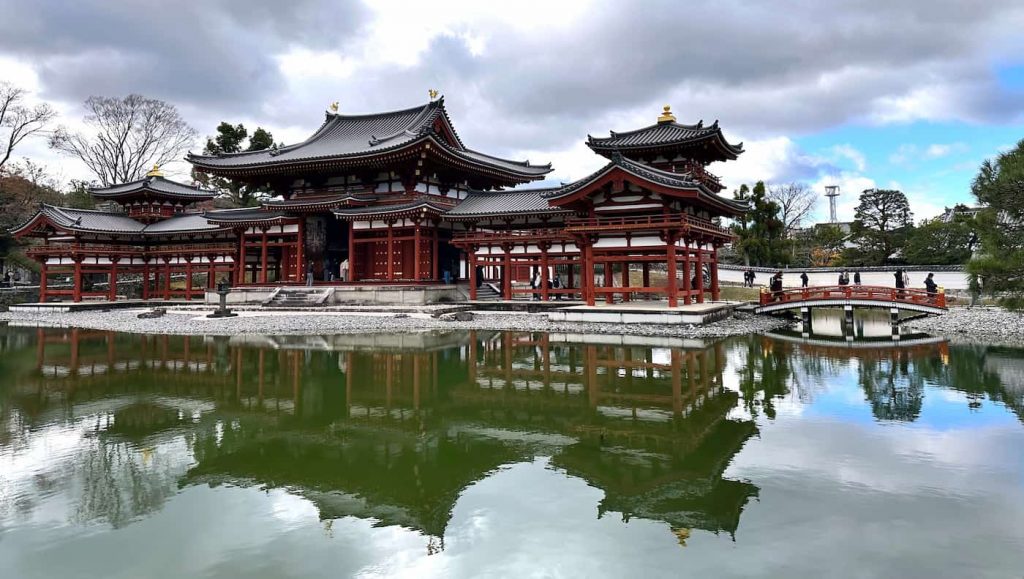
Wayō, or the “Japanese style,” is actually the oldest of the three. Wayō structures are typically characterised by a hidden roof structure concealed above a ceiling, bracket systems that are relatively simple and placed only at the tops of columns (not in the spaces between them), and a general preference for enclosed, intimate interior spaces. The exterior eaves are moderately pitched, and the overall composition tends toward horizontality and calm. Byōdō-in in Uji, from the late Heian period, is one example of this.
Daibutsuyō (大仏様)
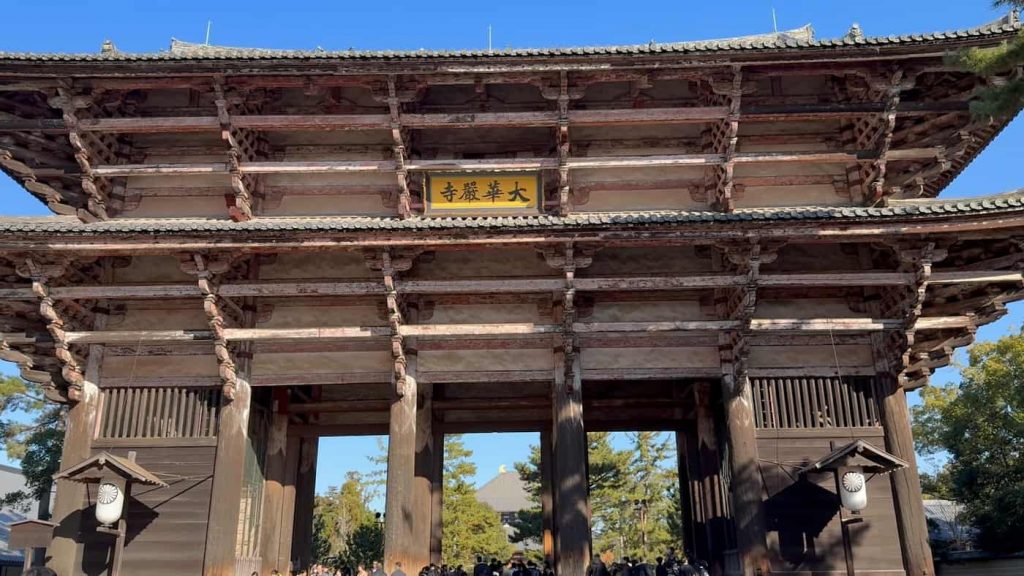
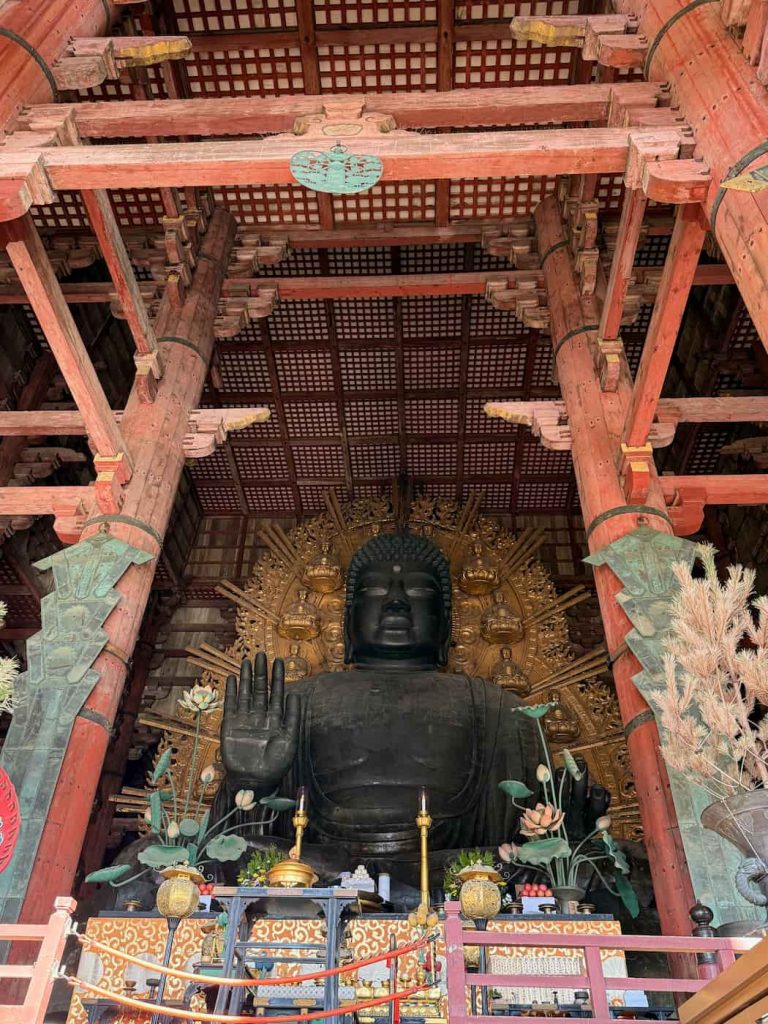
The Daibutsuyō style emerged in the late 12th century, associated primarily with the rebuilding of Tōdai-ji in Nara after it was burned during the Genpei War. The monk Chōgen, who oversaw the reconstruction, brought back elements from Song Dynasty China, but these were not simply ornamental borrowings, they were structurally innovative. The defining feature of Daibutsuyō is the insertion of bracket arms directly through the columns, allowing structural forces to be transmitted in a different, more direct way. The result is an exposed roof structure, no ceiling obscures the magnificent timber engineering above your head, giving the interior a raw, dramatic, almost industrial quality. Horizontal tie beams pass through multiple columns in sequence, binding the entire frame together. The structure is visible and celebrated rather than hidden. The great South Gate (Nandaimon) of Tōdai-ji in Nara is the finest surviving example of this style, and its colossal scale and exposed structural honesty are genuinely breathtaking.
Zenshūyō (禅宗様)
Zenshūyō emerged in the late 12th or early 13th century, based on contemporary Chinese architecture from the Song Dynasty. The style is named after the Zen sect of Buddhism that was introduced to Japan. These temples typically incorporate earthen floors, decorative curved pent roofs (called kara-hafu), pointed windows (called katōmado), and panelled doors. The columns are slimmer than in other styles, and the bracket systems more elaborate and tiered, creating a strong vertical emphasis. Rather than the monumental simplicity of Daibutsuyō, Zenshūyō offers curved surfaces and intricate joinery everywhere you look. Slim columns and low ceilings are used to create calming spaces suited to meditation but the complexes typically have a linear layout. The Shariden (relic hall) at Engaku-ji in Kamakura is one of the best surviving examples of early Zenshūyō.
Setchūyō (折衷様)
Over time, architects began to mix elements freely from all three styles, creating what is called setchūyō, or the eclectic style. By the Muromachi period (1336–1573), this hybridisation had become the norm rather than the exception, and most surviving temple buildings from the medieval and early modern periods draw from multiple traditions simultaneously. A single building might have a Wayō roof structure, Daibutsuyō tie beams, and Zenshūyō windows.
Roof geometry, hierarchy, and climatic intelligence
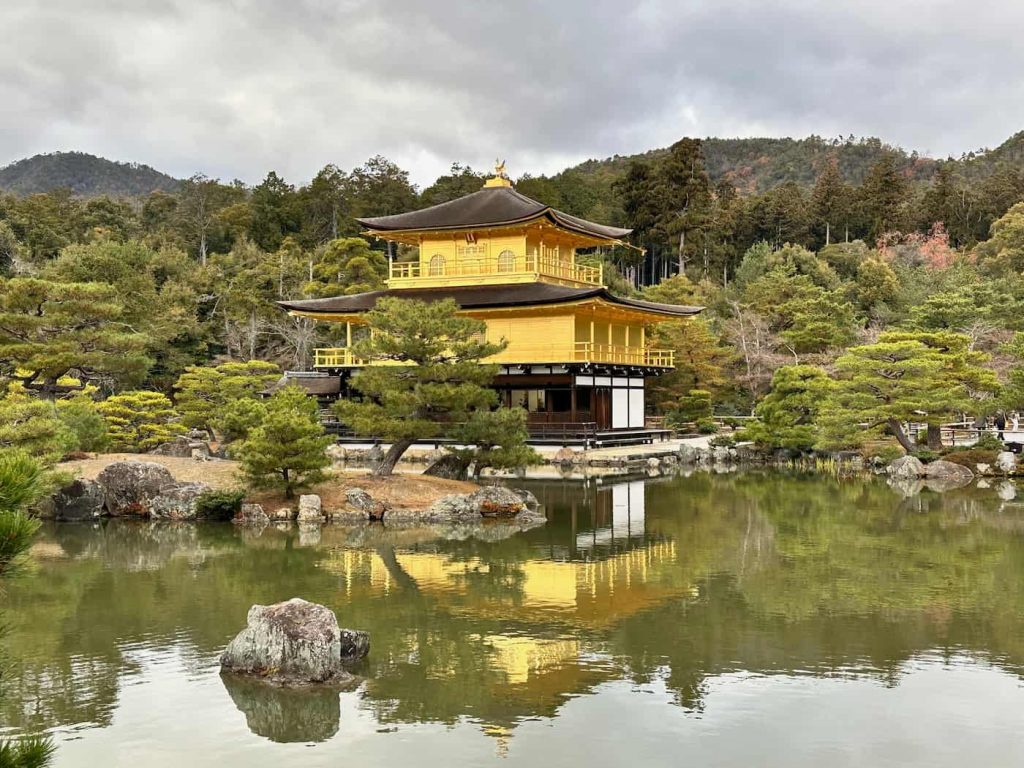
Japanese temple roofs are oversized relative to the enclosed space they protect, and this imbalance is intentional. The eave structure projects far beyond the walls, sometimes two, three, or four metres, supported by elaborate bracket systems that multiply from a single column capital into a forest of angled and stepped members. These brackets are not mere decoration; they are structural, distributing the enormous weight of the roof tiles across the timber frame. The roof is both a climatic device and a marker of hierarchy.
Several roof typologies define temple architecture, each with specific formal and symbolic implications.
Kirizuma (切妻): simple gabled roof, the ridge running parallel to the main axis. This is the oldest and structurally most direct roof form, and it appears in some of the earliest Shinto shrines. In Buddhist temples, it tends to appear on secondary structures.
Yosemune (寄棟): hipped roof, with four sloping faces meeting at a ridge. This is a more complex form than the kirizuma and projects grandeur and stability. Common in large main halls. The layering of roof planes also creates a visual hierarchy, often indicating the relative importance of different halls within a larger complex. Materiality further reinforces this hierarchy. Buddhist temples typically employ kawara tiles, ceramic elements that add both weight and durability. Their repetitive pattern catches light differently depending on the time of day and weather conditions. In contrast, certain Shinto structures use cypress bark or thatch, resulting in a softer, more organic silhouette.
Irimoya (入母屋): hip-and-gable roof, the most prestigious and visually complex of the standard forms. The upper portion is gabled; below the gable, the roof changes angle and sweeps outward in four hipped planes. This style is of Chinese origin and arrived in Japan together with Buddhism in the 6th century. It was originally used in the Kondō and Kōdō (lecture halls) of Buddhist temples.
Hōgyō (宝形): pyramidal roof, with all four faces meeting at a single point. Used on octagonal or square structures such as small shrines or memorial halls.
Kara-hafu (唐破風): curved, undulating gable roof that is one of the most distinctive and beautiful features of Zenshūyō architecture. The curve sweeps upward and outward from the eaves before curving back inward, creating a silhouette of extraordinary elegance. Often used as a decorative porch roof (kara-hafu no genkan) over the main entrance of important buildings.
The roof does not slope at a constant angle but curves upward at the corners, lifting the eaves skyward. The curvature of the eaves, achieved by a complex system of curved rafters and angled brackets, is one of the most beautiful geometric gestures in world architecture and plays a critical environmental role. It directs rainwater away from the building while modulating solar exposure. But beyond performance, it produces one of the defining spatial qualities of Japanese temple architecture: the deep, continuous shadow line that visually separates roof from structure, giving the entire composition a sense of levitation.
The temple plan and layout
The buildings work together as a compositional and spiritual system, not individual pieces. In classical Buddhist temple complexes, the organization is often axial. One enters through a gate, the sanmon, which marks the transition from the everyday world into the sacred precinct and beyond this threshold, the path leads toward the kondō, the main hall containing the principal object of worship, and often includes a pagoda (tō), which serves as a reliquary. This configuration, known as shichidō garan, organizes multiple buildings—lecture halls, bell towers, cloisters—into a coherent ensemble. Yet the experience is not purely formal; it is temporal. Each step, each threshold, recalibrates the visitor’s awareness.
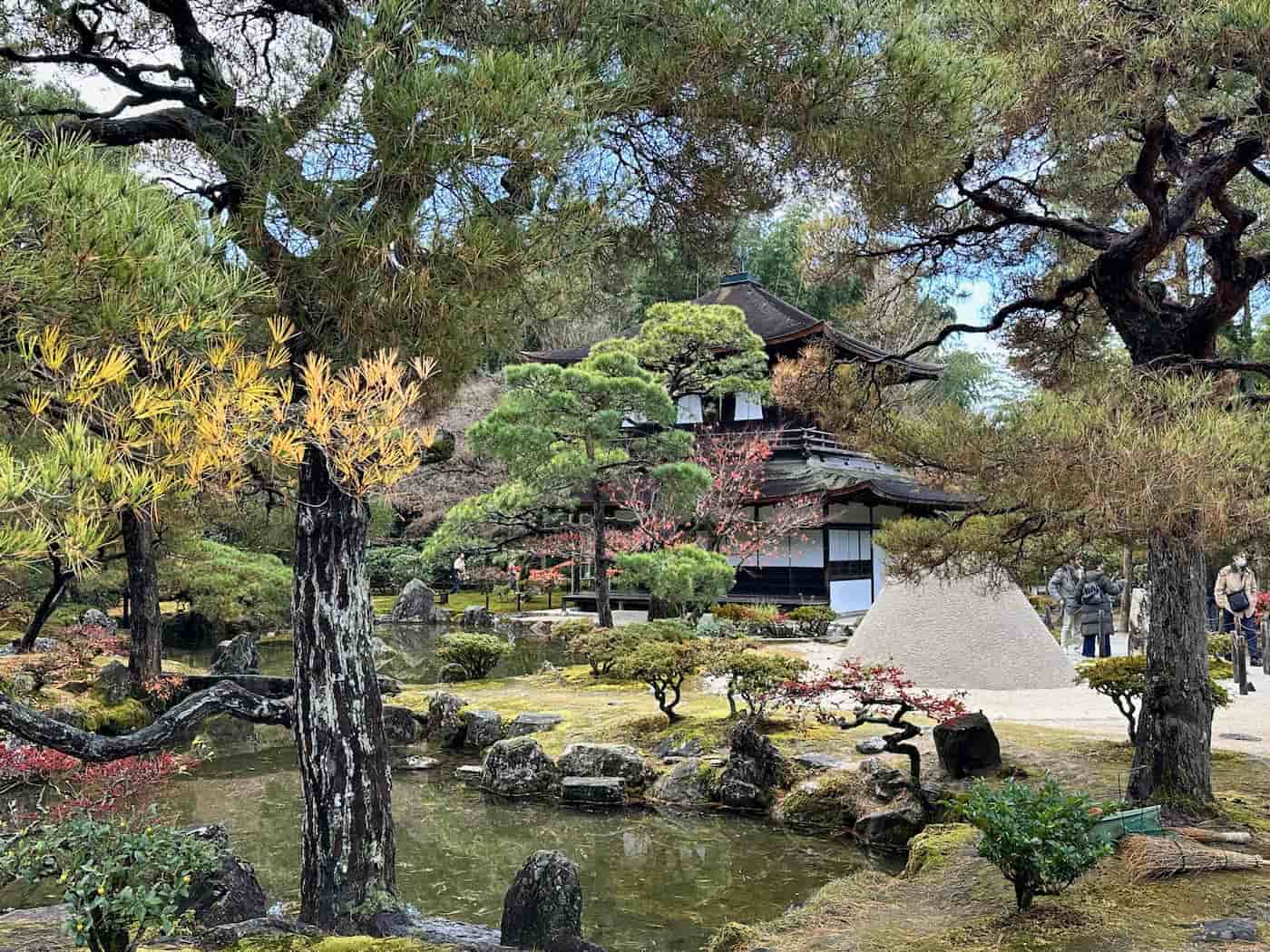
Zen temples reinterpret this logic through reduction. The axiality remains, but the emphasis shifts toward introspection. Spaces are fewer, more controlled, and often oriented toward gardens that serve as extensions of the interior. The famous dry garden of Ryōan-ji illustrates this perfectly. Here, the plan is not about circulation alone, but about framing perception. One does not move through the garden; one contemplates it.
The standard buildings of a mature Buddhist temple complex include:
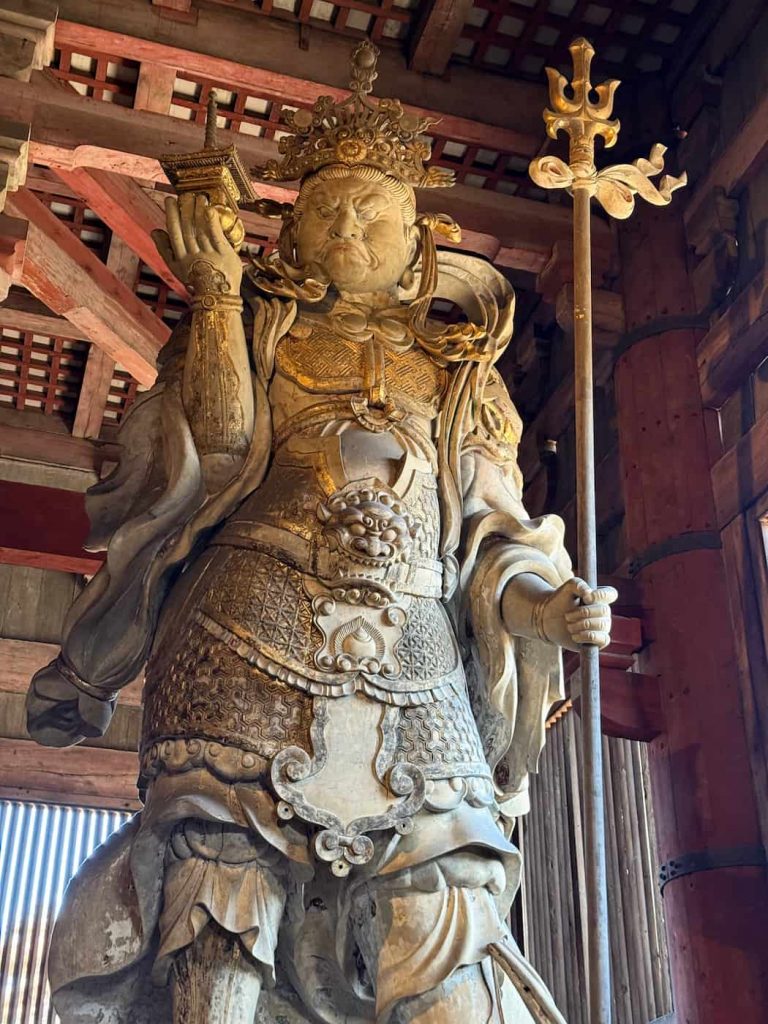
- Sanmon (山門): the main gate, often a two-storey structure flanked by fierce guardian figures (Niō or Deva Kings) whose terrifying visage protects the sacred space from malevolent forces.
- Kondō or Butsuden (金堂・仏殿): the main hall, housing the principal Buddha image and serving as the ritual heart of the complex.
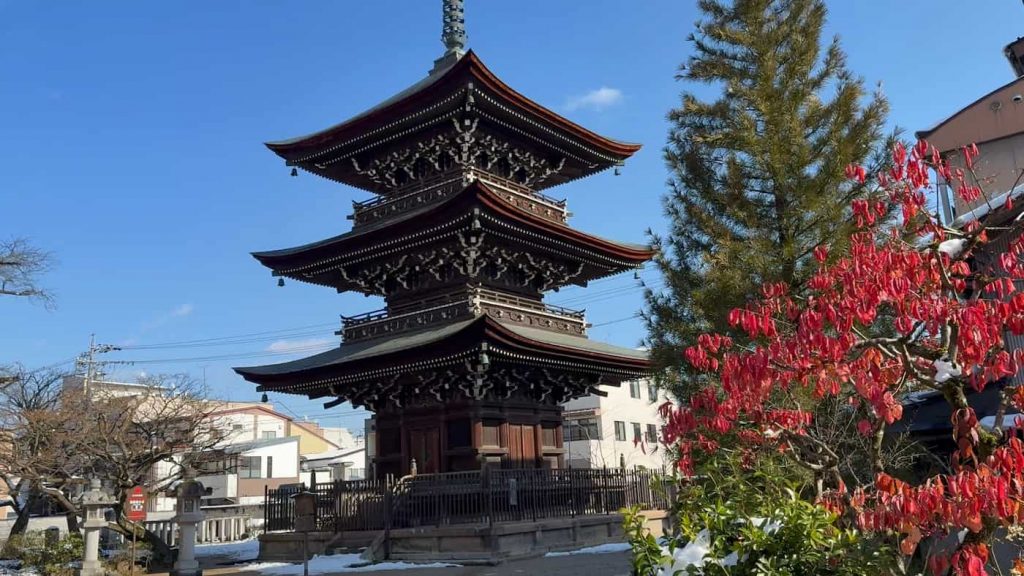
- Tō (塔): the pagoda, derived from the Indian stupa and representing the cosmic axis or the reliquary container of the Buddha’s remains. Japanese pagodas are almost always odd-numbered in their floors: three or five storeys are most common. The structural system of a Japanese pagoda, a central pillar (shinbashira) that runs from foundation to finial, connected to each floor by mortise-and-tenon joints, is one of the most sophisticated seismic-resistant structures ever devised. The shinbashira acts like a pendulum, absorbing lateral movement in earthquakes while the surrounding structure flexes independently.
- Kōdō (講堂): the lecture hall, where sutras are chanted and Buddhist teachings delivered.
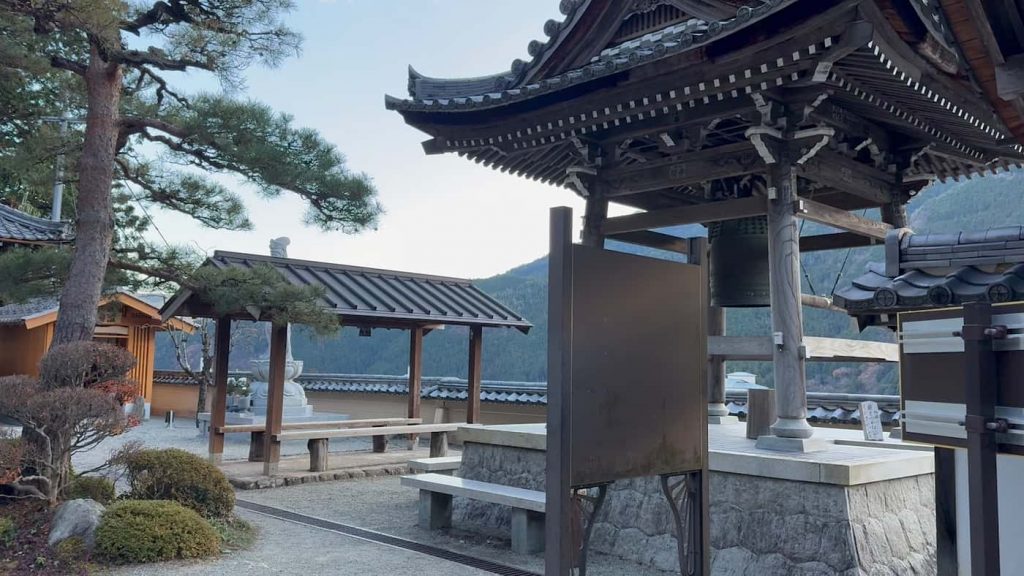
- Shōrō (鐘楼): the bell tower, housing the great bronze bell (bonshō) that marks the canonical hours of monastic life.
- Kyōzō (経蔵): the sutra repository, often a raised, ventilated structure for storing scriptures.
- Jikidō (食堂): the refectory, where monks dine in silence according to prescribed rules.
- Zen-dō (禅堂): in Zen temple complexes specifically, the meditation hall, where practitioners sit zazen for hours at a time.
Different spatial philosophies
As traditions diversified, different Buddhist sects developed characteristically different layouts.
The layout, type of buildings and spacial sequence reflects the different practices and spiritual orientations of each Buddhist sect. In Zen, the goal is direct experience, achieved through seated meditation and disciplined daily routine; the linear progression of the compound reflects a journey of increasing interiority. In Pure Land Buddhism as an example, the goal is rebirth in the Western Paradise of Amida Buddha, and the garden with its pond, island, and shrine literalises that paradisiacal geography. Across both Buddhist and Shinto traditions, certain building types and architectural elements recur, forming a shared vocabulary that is immediately recognisable but need to be read as two fundamentally different ways of conceiving architecture.
Zen temples construct an inward world. Their spaces are measured, controlled, and often austere. Materials are left to age naturally, reinforcing a sense of continuity. The architecture frames emptiness, allowing proportion and light to become the primary expressive tools. Shinto shrines, on the other hand, dissolve the boundary between building and landscape, do not seek to contain the sacred. The architecture is lighter, more permeable, and often subordinate to its surroundings.
Zen Buddhist Temples
Zen arrived from China in the 12th century, and it brought with it not just the Zenshūyō architectural style but an entire aesthetic philosophy: wabi (the beauty of imperfection and transience), sabi (the patina of age and solitude), and a radical commitment to directness and simplicity as spiritual disciplines. For a Zen Buddhist, meditation is not preparation for enlightenment, it is enlightenment experienced moment by moment. This orientation profoundly shaped the architecture of Zen monasteries.
The layout of a Zen temple compound called a garanshichi-dō is strictly axial and linear. Entering through the Sōmon (a smaller outer gate) and then the Sanmon (the main gate), you proceed along a central axis that passes through the Butsuden (Buddha Hall), the Hattō (where the abbot delivers public teachings), and the Hōjō (the abbot’s quarters). Flanking this axis are the Zendō (meditation hall), the kitchen and refectory, and the bathhouse, each with its own precise architectural specification derived from the monastic codes.
Earthen floors, decorative curved pent roofs, pointed windows (katōmado), and panelled doors are the vocabulary elements of Zenshūyō design, and you find them throughout the great Zen monasteries of Kamakura and Kyoto. The pointed windows (katōmado, literally “flower-shaped windows”) are one of the most elegant architectural inventions of the Zen tradition. In contrast, the interiors of the Zen temple are spare, the walls are white plaster, the floors are either bare earthen floors or tatami mats, the structural elements are left visible and unstained, light enters through shoji screens as diffused, directionless illumination, eliminating shadow and drama in favour of an even, contemplative luminosity. The result is a space that, paradoxically, achieves tremendous presence through radical subtraction, every element that has been removed increases the weight of what remains.
In the great Kyoto Zen monasteries such as Daitoku-ji, Myōshin-ji, Tōfuku-ji, there are some of the most extraordinary dry landscape gardens (karesansui) composed of raked gravel and carefully placed stones that function as meditation objects. They are designed to be viewed from the veranda of the Hōjō, while seated in contemplation: not a garden to walk in, but a garden to observe from a fixed point.
Shinto Shrines
Shinto shrines, jinja, require a fundamentally different analytical framework, because they emerge from a completely different conception of the sacred. Where Zen monasteries organise the space around an image, a represented being, a doctrinal teaching, Shinto organises its space around a presence: a kami, a divine spirit that may reside in a specific place such as a rock, a tree, a mountain, a spring, and that requires acknowledgement and propitiation rather than doctrinal elaboration.
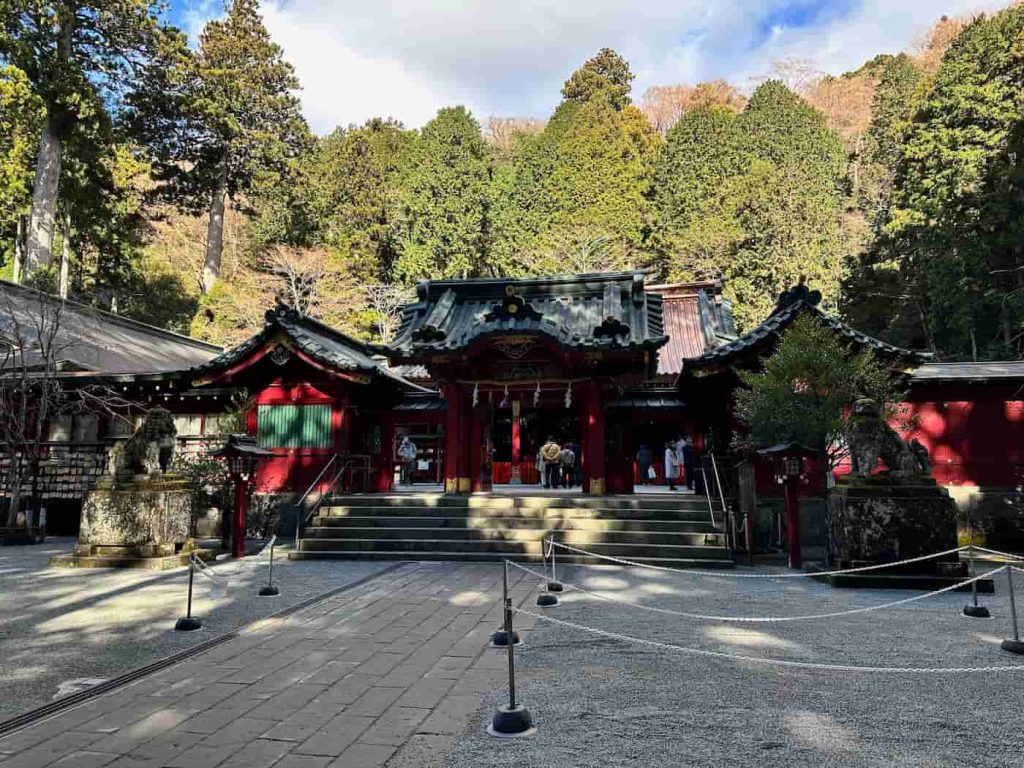
This has profound architectural implications. The Shinto shrine does not need to be a grand building housing images and performing rituals of doctrinal instruction. Often, the most architecturally powerful Shinto spaces are defined not by the building at all, but by the landscape: the sacred grove that surrounds most shrines, the approach path that frames the journey toward the sanctuary, and the torii gate that marks the transition between ordinary and sacred space.
The Torii
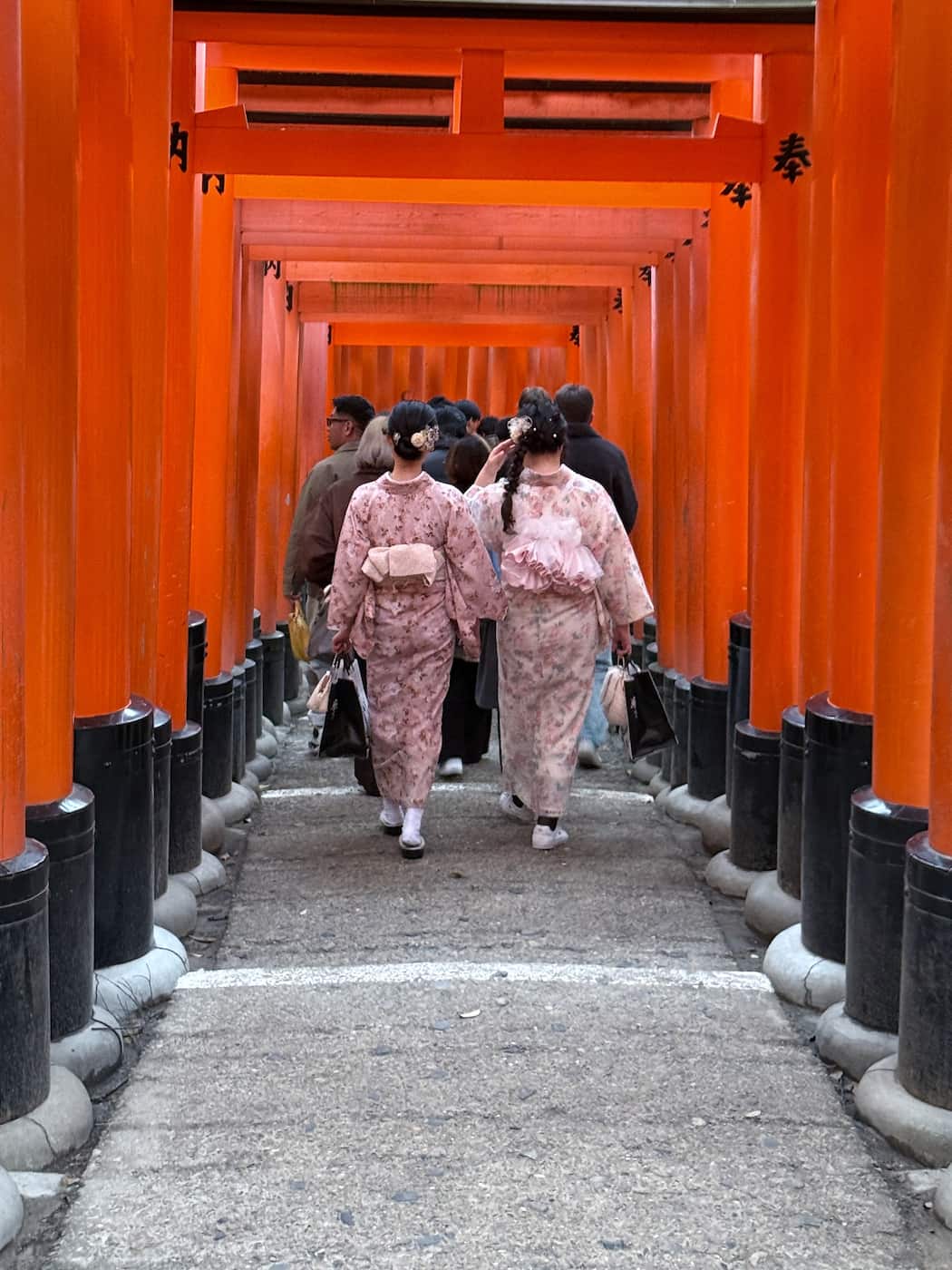
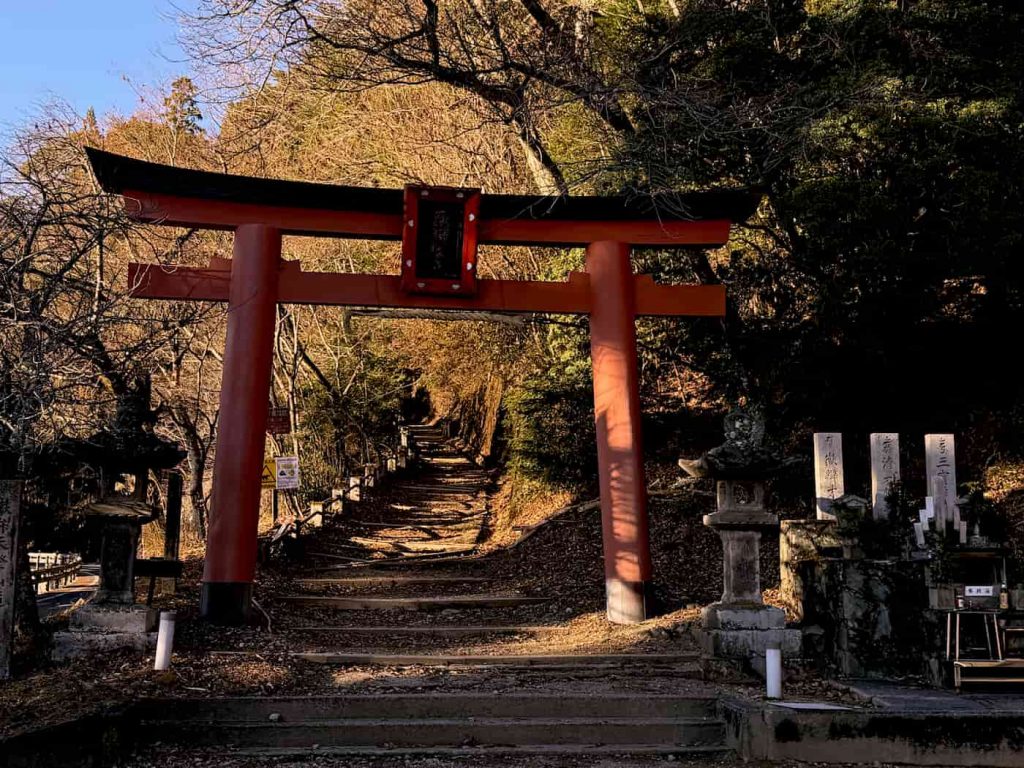
The torii is perhaps the most universally recognised element of Japanese visual culture, it is an architectural idea of almost primal simplicity and power. Two uprights and two crossbeams, sometimes slightly curved, painted in vermilion or left in natural wood, standing in the landscape as a gateway between worlds. A great example is Fushimi Inari Taisha in Kyoto, where hundreds of torii gates create a continuous sequence of thresholds along the mountain path.
The shrine layout
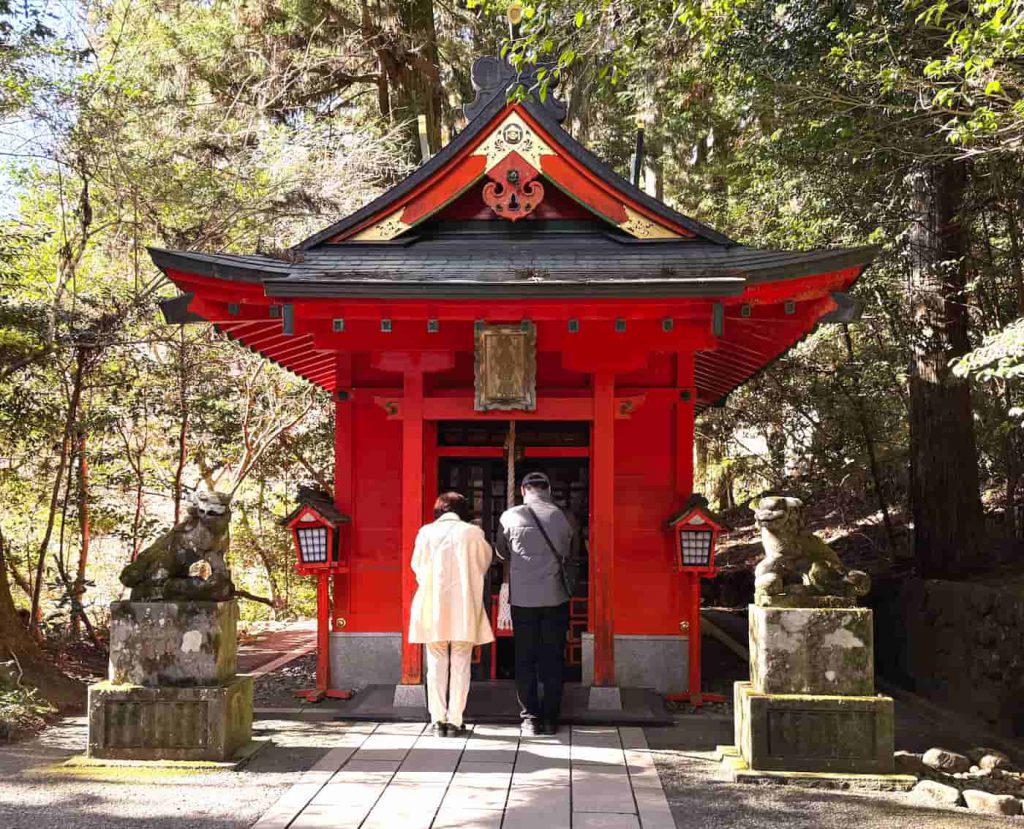
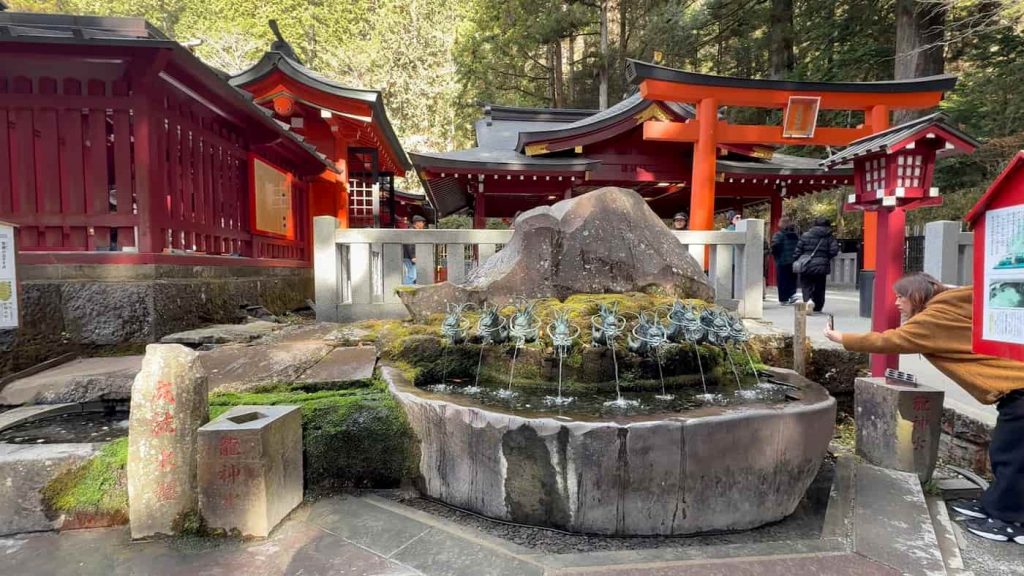
The Shinto shrine precinct is essentially a diagram of approached presence: you move through the torii, along the sandō, past the temizuya (the water basin where you purify your hands and mouth), past the stone lanterns (tōrō), past secondary shrines and subordinate structures, until you reach the worship hall (haiden). You do not usually enter the inner sanctuary; you stop at the haiden, pull the rope to ring the bell, bow twice, clap twice, bow again, and offer your prayer. The innermost sanctuary (honden), where the kami actually resides, is typically not accessible to ordinary worshippers.
Shinto architectural styles
Shinmei-zukuri: the oldest and purest style, associated with Ise Grand Shrine and considered the originary form of Japanese architecture. Built with unfinished wood, Shinmei-zukuri shrines are distinguished by the gabled roof with decorative logs called chigi and katsuogi, as well as the raised floor. The chigi are the scissor-like logs that project beyond the ridge beam at each end, while the katsuogi are the short horizontal logs laid at right angles across the ridge. These elements are thought to derive from the construction of ancient storehouses, where such features served structural functions before becoming purely symbolic. Ise Jingū, the most sacred site in Shinto, is built in the Shinmei-zukuri style and is rebuilt every twenty years in a ceremony (shikinen sengū) that simultaneously preserves the tradition and performs its impermanence .
Taisha-zukuri: the style of Izumo Taisha in Shimane Prefecture, is known for its distinctive single central pillar called the shin no mihashira, its gabled roof, as well as the decorative logs that can also be found in Shinmei-zukuri. The central pillar is literally the axis of the world, a cosmological concept made architecturally legible.
Nagare-zukuri: the most common shrine style in Japan, characterised by an asymmetrical gabled roof in which the front slope is much longer than the rear slope, sweeping down to cover a protective veranda over the entrance.
Kasuga-zukuri: the style of Kasuga Grand Shrine in Nara, with a small, single-bay plan and a distinctive front-facing gabled porch. The Kasuga style is notable for its intimate scale. The approach to Kasuga through the sacred deer park of Nara, lined with hundreds of stone lanterns, is one of the great architectural promenades in Japan.
The key differences between Zen Buddhist temples and Shinto Shrines
Zen temples are, in many ways, exercises in reduction. In Shinto shrines the kami, or spirits, are believed to inhabit natural elements so the building acts less as a container and more as a marker. But perhaps the most profound difference lies in how each tradition engages with the landscape. Buddhist temples often construct a world within their boundaries, a composed environment where architecture and garden are tightly integrated. Shinto shrines, by contrast, defer to the existing landscape, embedding themselves within it.
In winter, these layers become especially perceptible. With fewer visitors and quieter surroundings, the act of moving through a temple or shrine becomes almost architectural in itself. Gravel crunches underfoot, marking progression. Steps slow the body. Water basins require a pause for ritual cleansing. Each element participates in a carefully orchestrated sequence. For me, this was the most valuable lesson of the journey: these temples are not static objects but spatial experiences structured over time. They are less about form and more about relationship between structure and climate, between ritual and movement, between built form and the natural world. This is the difference, ultimately, not just between two architectural traditions but between two ways of encountering the sacred.