

There’s a very specific kind of frustration that only happens when you’re a designer trying to buy a bag. You know too much. You’ve spent years thinking about form, materials, proportions, and construction. You pick something up in a shop and you’re already reading the stitching, the hardware finish, the weight distribution, the way the strap attaches. And then you put it down because the detail is wrong, or the leather feels like a compromise, or the proportions are just slightly off in a way you can’t articulate but can’t ignore either.
I was looking for my next everyday bag, and the only article I could find for designers was an old 2024 article on Dezeen for innovative materials/shapes but I was looking for something very different, a quality leather bag that could hold a laptop, a sketchbook, the inevitable extras that accumulate over a working day, without feeling like an afterthought or a corporate statement. I wanted something designed with the same kind of intelligence I try to bring to work. And I found that the conversation I wanted to have about design philosophy, material honesty, manufacturing, structural thinking wasn’t really happening anywhere in a single place. There are fashion reviews and endless YouTube videos, lifestyle round-ups, and comparison guides, but very little written for people who care about bags the way I care about buildings and objects, with a critical eye and a genuine curiosity about how and why things are made the way they are and by whom.
So I started researching and spent time looking at mid-range designers and independent labels, brands operating in that interesting space between accessible and aspirational, where real design decisions are being made without the institutional weight of a luxury house behind them. I looked into the founders, the production methods, the material choices, and the underlying design philosophies.
This post is about my thoughts and what I found out. It’s not a definitive list but a personal one. Each bag here made it here for a different reason, sometimes material intelligence, sometimes structural curiosity, sometimes pure functional resolve, sometimes something harder to name. I’ve grouped them as honestly as I can, because how an object performs and what it says about design are two different conversations, even when they’re happening in the same object. I hope it’s useful for you not just as a buying guide, but as a starting point for thinking about the objects we carry every day with the same analysis we bring to the spaces we design.
Quiet minimalism bags
This is the space many of us naturally gravitate towards, not because “minimalism” is a trend, but because it mirrors how we already think: through reduction, hierarchy, and control of form. These are bags that behave a bit like resolved architectural models, nothing unnecessary, everything considered.
Aesther Ekme / Lune Tote
Stéphane Park, founder of Copenhagen’s Aesther Ekme, has spoken about how the brand draws on Scandinavian design clarity while introducing a softness informed by Latin American geometry. Production is based in Turkey and Spain with ethically sourced leather and suede.
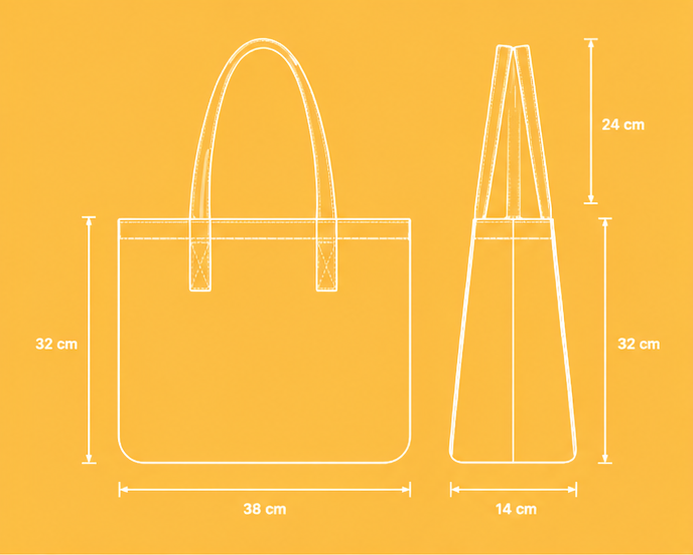
The Lune Tote is almost the purest expression of reduction in this entire group. There is very little to “read” visually, and that’s exactly why it works so well in a design context. No decoration. No branding noise. No unnecessary articulation. Just volume, proportion, and edge control. It feels like a resolved massing study, something we’d recognise immediately from studio critique culture. And for our kind of work life, that neutrality is not absence. It’s clarity. It doesn’t ask you to shift between “work bag” and “life bag”. It just holds everything without changing tone.
Aesther Ekme / Ora
The Ora sits in the same design universe, but with a slightly more human softness in its geometry. Where the Lune is strict and almost diagrammatic, the Ora allows curvature to exist without losing discipline. And that shift is subtle but important. Because when we think about how we actually move through space, studio to meeting, desk to train, site to dinner, objects that adapt to movement tend to feel more natural over time. The Ora doesn’t impose structure on you. It follows our structure.
DeMellier / The New York
DeMellier was founded in London by Mireia Llusia-Lindh, who was born in Barcelona and holds an MBA from Harvard Business School, where she refined her strategic thinking before turning her focus to the luxury goods industry. She worked as a strategy adviser to major firms including Burberry and LVMH before founding DeMellier with a vision for accessible luxury and ethical production. Every bag is handcrafted in Spain using sustainably sourced Italian and Spanish materials, and for every piece sold, the brand funds vaccines and treatments for children in need through their permanent charity initiative.
The New York bag feels like one of those rare pieces that actually understands how we work in real life. Structured but not rigid. Elegant but not fragile. Designed but not overdesigned. You can tell it’s been thought through in terms of daily use: how it opens, how it carries weight, how it behaves when it’s overstuffed, which, let’s be honest, is most of the time for us. It’s the kind of bag that doesn’t ask you to behave differently. It adapts to how you already work.
MIUUR / Kota L Bag
MIUUR is a Barcelona-based brand focused on minimalist, high-quality leather goods. Designers trained in European design schools emphasise transparency in construction, material honesty, and reduced formal language. Production is small-scale in Spain and Portugal.
The Kota L Bag feels almost like something from an industrial design studio rather than a fashion house. There’s a directness to it that I personally appreciate: you can read how it’s constructed without needing to be told. And as designers, that kind of transparency matters more than people outside our field often realise. We’re constantly thinking in systems, sections, assemblies, joints, transitions. So when an object reflects that same clarity, it feels instinctively right. No unnecessary gesture, just resolution.
A.P.C. / Shoulder Bag Neige
A.P.C. (Atelier de Production et de Création) is a Paris-based brand founded in 1987 by Jean Touitou, a Tunisian-born designer who gained experience working at Kenzo and other industry roles before establishing the label. The brand has consistently maintained a philosophy rooted in restrained, everyday design, often described as a form of “anti-fashion” minimalism, focusing on clean construction, durability, and understated elegance rather than seasonal expression. Its identity has been shaped less by individual creative directors and more by Touitou’s long-standing design vision, with occasional collaborative influences over time.
The Shoulder Bag Neige reflects this long-standing Parisian minimalism through a calm, almost neutral design language. It is defined by a simple rectangular structure softened through use of supple leather, with minimal hardware and a clear focus on proportion and utility. The design avoids visual noise entirely, relying instead on material quality and silhouette balance to create presence. Over time, the leather develops a natural patina, reinforcing A.P.C.’s consistent emphasis on longevity and everyday wear. It sits firmly in the category of quiet, unobtrusive design, a bag that integrates rather than announces itself.
Radley / The Maudie
Radley London, founded in 1998, produces accessible, practical leather goods. The team blends traditional British craft with modern usability principles. Production spans China and Italy depending on the line.
The Maudie sits in a different register compared to the more conceptual pieces above. It’s softer, more domestic in its sensibility. But there’s value in that. Not every object we use needs to be a design statement. Some just need to integrate into the rhythm of daily work without friction. And the Maudie does exactly that. It’s the kind of bag you stop thinking about after a week and that’s usually the best compliment you can give something that lives with you every day.
Studio bags that perform under pressure
In this group there are workhorse elegance bags that aren’t just considered in theory, but in repetition, weight, and time. Objects that continue to function well after the initial design impression has worn off.
Shinola / Derby Shoulder Bag
Shinola is a Detroit-based brand founded in 2011 by Tom Kartsotis, originally established around a wider ambition to revive American manufacturing and rebuild local craft ecosystems in the city. Before Shinola, Kartsotis had already built Fossil into a major global accessories company, and later applied that experience to a more design-led, production-focused model centred on watches, leather goods, and lifestyle objects. The brand’s design language is closely tied to this industrial context — prioritising durability, material honesty, and a kind of restrained, utility-driven aesthetic that reflects Detroit’s manufacturing heritage.
The Derby Shoulder Bag reflects this philosophy through a clear, unembellished design language that favours proportion and construction over decorative detail. Its silhouette is broad and gently curved, with softened edges that give the bag a more sculptural presence than its functional category might suggest. Rather than relying on hardware or surface detailing, the design is carried by the quality of the leather. There’s nothing fragile about it. It feels grounded, almost industrial in spirit, with leather that is meant to age visibly rather than stay untouched.
Kate Spade / Deco Tulip Tote
Kate Spade New York is an American brand founded in 1993 by Kate and Andy Spade, known for combining playful colour and graphic clarity with functional accessories design, mostly produced in Asia.
The Deco Tulip Tote sits in a slightly more expressive space compared to the strict minimal pieces. There’s structure here, but also a softness in the visual language, almost a controlled decorative gesture rather than pure reduction. This kind of object can actually be useful in a very simple way: it changes the emotional tone of a working day without disrupting function. Sometimes that matters more than strict minimalism. Not every day needs to feel like a white cube. Some days benefit from a bit more visual warmth, especially when everything else is spreadsheets, deadlines, and technical drawings.
J&M Davidson / Ray Bucket Bag
J&M Davidson is a London-based brand founded in 1984 in Notting Hill by J& M Davidson, known for its understated leather goods rooted in equestrian references and British utilitarian design language. The brand’s identity originally emerged from a single belt inspired by bridle construction, which set the foundation for its wider approach to accessories — defined by functionality, material quality, and subtle detailing rather than overt branding or fashion-led design direction.
The Ray Bucket Bag is one of J&M Davidson’s most recognisable designs, and its concept is far more specific than a standard “sturdy everyday bag.” It is defined by a distinctive silhouette inspired by the shape of a stingray, which gives the bag its soft, wide, almost floating geometry rather than a strictly vertical bucket form. The design is deliberately hybrid in its behaviour: structured at the base for stability, but increasingly soft and pliable towards the top, allowing it to collapse and transform when carried. This duality is central to its design logic, it can be worn on the shoulder in a relaxed, voluminous form, or folded under the arm into a more compact, clutch-like silhouette. Over time, the leather softens further, reinforcing this adaptability and giving the bag a more fluid, almost architectural behaviour in use rather than appearance alone.
Liffner / Belted Bucket Bag
Liffner (formerly Little Liffner) is a Stockholm-based brand founded by Paulina Liffner von Sydow, known for sculptural minimal leather goods with a production base primarily in Italy, specifically a family-run atelier outside Florence. The brand focuses on clean design, structured silhouettes, and restrained material palettes, using bi-product hides from LWG-certified tanneries and fully recyclable packaging.
The Belted Bucket Bag is a good example of that Scandinavian design clarity. It takes a familiar form and reduces it to its essential geometry, then introduces a single structural gesture, the belt that holds everything together visually and functionally. There’s something very architectural about that decision: one defining element, everything else subordinated to it. For us, this is familiar territory. It feels like a design principle translated directly into object form.
Origami vibe
These are hybrid bags that adapt rather than dictate. Softer in structure, more responsive in use, and better suited to the kind of fluid, unpredictable routines many of us work within. We move from studio to meeting to site visit to dinner sometimes without ever going home in between. And the bag we carry starts to behave less like a fixed object and more like an adaptive container for an unpredictable day.
Maison Margiela / MM6 Japanese Bags
Maison Margiela was founded in 1988 by Belgian designer Martin Margiela, an alumnus of the Royal Academy of Fine Arts in Antwerp, and is synonymous with conceptual deconstruction. MM6 is the label’s diffusion line, with its own dedicated design team that has maintained the house’s original codes closely. The wider Maison Margiela recently welcomed Glenn Martens as its new creative director in January 2025, following John Galliano’s decade-long tenure which ended in December 2024.
The Japanese Bag is a study in origami-inspired structure. Panels align, edges fold, and handles thread through openings, producing a form that exists fully in motion. Every crease and stitch choreographs a rhythm, transforming carrying into an architectural experience.
The Mini Japanese Tote Bag condenses the same folding principles of the Japanese Bag into a compact sculptural form. Its proportions shift how it occupies the body, emphasising three-dimensionality and tactility. The mini silhouette proves that conceptual design can function at different scales while maintaining structural clarity and visual intrigue.
Phillip Lim / Luna Bag
Phillip Lim, a Los Angeles-born designer, studied at the Fashion Institute of Design and Merchandising before co-founding 3.1 Phillip Lim in 2005. His design philosophy blends modernist restraint with approachable elegance, pieces that balance structure, fluidity, and everyday usability. Production is mainly in Asia, with careful attention to high-quality leather and thoughtful construction.
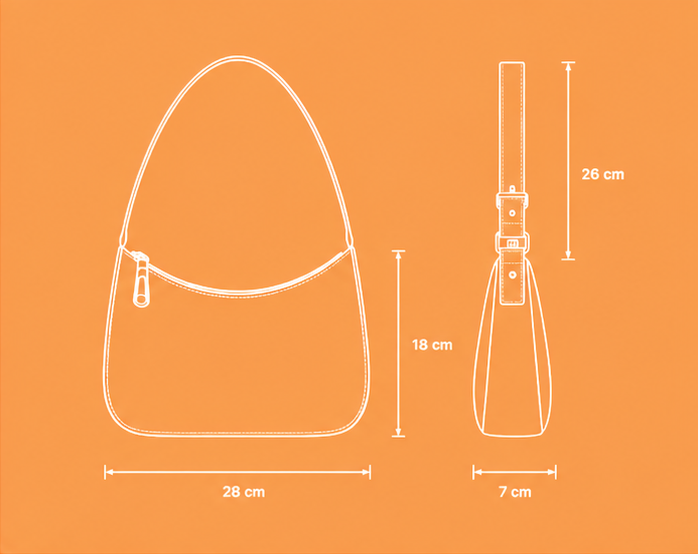
The Luna Bag is a study in soft architecture. Its crescent silhouette maintains a sense of volume while remaining supple and adaptable, the leather carrying weight gracefully without losing shape. Subtle panelling and a restrained strap design give it directional clarity and a quiet composure. It feels as if the bag has been designed to move with you, adjusting naturally to your day whether loaded with sketches, a laptop, or the unexpected extras that accumulate in real studio life.
Polène / Cyme
Polène is a Paris-based brand founded in 2016 by three siblings: Antoine, Mathieu, and Elsa Mothay. The family has deep roots in French manufacturing, their great-grandfather founded the heritage French brand Saint James. The siblings combined complementary expertise to build Polène from scratch, with Antoine overseeing operations and creative direction, and Mathieu spending the brand’s early years personally inspecting every piece of leather that went into production. Production takes place in Ubrique, Spain, using Italian-sourced leathers and a commitment to quality and sustainability.
The Cyme is one of those bags that immediately feels like it comes from a design mind that understands folding logic. It can be folded, expanded and reduced in 4 different ways. It’s sculptural, almost like a soft architectural form held in tension, two volumes in conversation, shaped by folds and controlled collapse. What I like about it, what many of us probably respond to, is how it behaves through a working day. It expands when we load it with everything we actually carry, laptop, drawings, notebooks, samples, and then somehow returns to a composed silhouette when it’s set down. It’s not static. It behaves more like a responsive structure than a fixed object.
Structured versatile bags
La Portegna / Adelina Bag
La Portegna is a Madrid-based artisanal leather brand founded by British designer Nick Riddiford. Riddiford studied at the London College of Fashion before apprenticing in Italian ateliers, developing a deep commitment to traditional craftsmanship, vegetable-tanned leather, and slow production. The brand works closely with small workshops in Spain, prioritising longevity over speed.
The Adelina Bag sits very clearly in that artisan-led space. It feels slower by design. You can sense the emphasis on material honesty, leather that is allowed to age, stitching that is meant to be visible, construction that prioritises longevity. This kind of object feels almost like a counterbalance to the speed of our work. Everything in design and architecture moves fast: revisions, deadlines, iterations and it reminds you that not everything has to be immediate.
Atelier Auguste / Monceau
Ateliers Auguste is a Parisian brand founded in 2012 by brothers Laurent and Xavier Valembert. They shape the brand’s emphasis on purposeful form, visual clarity, and considered construction with creative architectural references: Le Corbusier, Jean Prouvé, Mies van der Rohe, and the Eameses, designers who understood that beauty is a product of proportion, material honesty, and structural logic rather than ornamentation. Production is handcrafted in Italy, primarily in family-run workshops in the Venetian countryside.
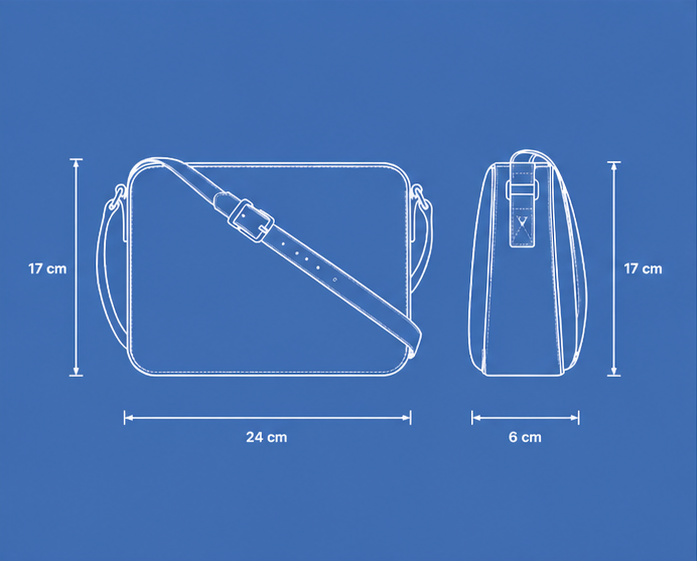
The Monceau is a compact structured crossbody, clean in its geometry and disciplined in every detail. The silhouette is a rectangular body with flat, defined edges that holds its shape with no softening or slump. There is no exterior branding, no surplus stitching, nothing that doesn’t earn its place. The adjustable leather strap allows it to move between shoulder and crossbody carry with ease.
Songmont / Luna Bag
Songmont is the brand I was most surprised with, due surely to preconceived ideas but most especially by the quality of the designs and craftsmanship. It is a Chinese independent leather brand founded in Beijing by Yier Wu, known for combining traditional craftsmanship with a contemporary design language rooted in soft architecture and functional minimalism. Production is based in China with a focus on small-batch manufacturing and thoughtful material selection.
The Luna Bag is defined by its adaptability system as much as its form. Its crescent-shaped silhouette is intentionally soft and unrestrictive, but the most distinctive design decision lies in its multi-configuration strap and attachment system, which allows the bag to shift between different modes of wear, shoulder, crossbody, handheld, and more sculptural folded variations depending on how the strap is adjusted or detached. This transforms it from a static object into a modular carry system, where use changes the form rather than the form dictating use. Combined with its craft-led construction and tactile materiality, the Luna becomes less a fixed handbag and more a responsive object, one that adapts to context, movement, and the way it is handled in daily use.
Strathberry / Kite Sling bag
Strathberry is a Scottish brand founded by Guy and Leeanne Hundleby in Edinburgh, known for structured leather goods defined by precise construction and their signature metal bar detail. Production is primarily based in Spain, with a focus on high-quality leather craftsmanship and controlled manufacturing processes.
The Kite Sling feels like a distilled study in geometry. There is a clear structural logic to it, almost like a small architectural element translated into a wearable form. What stands out is the tension between softness and control: it carries enough structure to feel intentional but enough ease to remain practical for daily use. Nothing is purely rigid or purely soft in real work. Everything exists in negotiation.
Osoi Mini / Crescent Moon Bag
OSOI is a Seoul-based accessories brand founded by designer Jinyoung Park, who studied industrial design at Konkuk University and worked in fashion accessories development before establishing the label. The brand operates as a small independent studio in Seoul, where Park also functions as the creative director, shaping its sculptural design direction.
The Mini Crescent Moon bag reflects OSOI’s focus on form-led design, with Jinyoung Park drawing inspiration from architectural curves, negative space, and the quiet geometry found in natural lunar phases. The bag is defined by its compact crescent silhouette, built from a continuous curved body that prioritises proportion and outline over decoration. Its structure is soft yet controlled, allowing it to maintain its sculptural arc whether carried or set down, while still adapting subtly to contents through gentle deformation of the leather. Minimal hardware reinforces the clarity of the form, keeping attention on curvature and volume. The result is a small-scale object that sits between functional accessory and sculptural study, consistent with OSOI’s broader interest in reduced, shape-driven design.
Staud / Maude Shoulder Bag
Staud was founded in Los Angeles in 2015 by Sarah Staudinger and George Augusto. Sarah studied at The New School in New York, where she also took courses at the affiliated Parsons School of Design, before building her career in fashion, most notably as fashion director at Reformation. She serves as creative director of the brand.
The Maude Shoulder Bag emphasises proportion and suspension. Rounded edges intersect planar surfaces, minimal hardware accents structural clarity, and straps articulate the bag’s rhythm with the body. It reads as a small architectural gesture: sculptural, considered, and purposeful.
Coach / Empire Carryall 34
Coach is probably the most well known of the brands in this section. It is an American heritage brand founded in New York in 1941, historically known for leather craftsmanship and more recently repositioned under the creative direction of Stuart Vevers, a University of Westminster graduate with previous experience at Loewe, toward a cleaner, more design-conscious identity. Production is based mostly in Asia.
The Empire Carryall 34 feels part of this newer, more refined Coach language. It’s structured but not rigid, polished but not over-stylised. What stands out is how balanced it feels in everyday use. It can carry a laptop, notebooks, and everything else we accumulate through the day without collapsing into itself or losing shape. It works across contexts without requiring a change in identity. And that’s something we don’t talk about enough in design objects: how much identity stability they allow us to keep across different environments.
My final thoughts
What unites these pieces is curiosity and intelligence. They explore edges, folds, suspension, and tension in ways that engage the senses and posture. Weight, proportion, and rhythm are deliberate — making the act of carrying a moment of reflection.
They remind us that design can be expressive without decoration. Structural articulation, material choice, and the choreography of folds communicate intent. Unlike workhorse bags, these objects provoke, inspire, and redirect perception — turning movement and interaction into a thoughtful design experience.
